
The key to success in your trucking business is to find a freight dispatcher that is right for you. Now, a good dispatcher isn’t just about booking loads. They assist you in decreasing empty miles, negotiating better rates, handling paperwork, maintaining regular communication with brokers, and keeping your truck on the road.
The wrong dispatcher can result in low-paying loads, lack of communication, and likely downtime for owner-operators and small fleets. This, of course, is why it is essential to know your way around before entrusting your business to anybody.
This helpful guide helps you pick the right freight dispatcher and the factors you should look for to distinguish a good freight dispatch service from the rest.
Why Your Freight Dispatcher Matters
As an owner-operator, your time is valuable. Every hour spent searching for loads or negotiating with brokers is time you’re not driving.
A reliable freight dispatcher helps you:
- Find quality loads
- Negotiate competitive freight rates
- Reduce deadhead miles
- Manage broker communication
- Handle paperwork
- Plan efficient routes
- Keep your schedule organized
The right dispatcher becomes a business partner focused on helping you earn more while reducing daily stress.
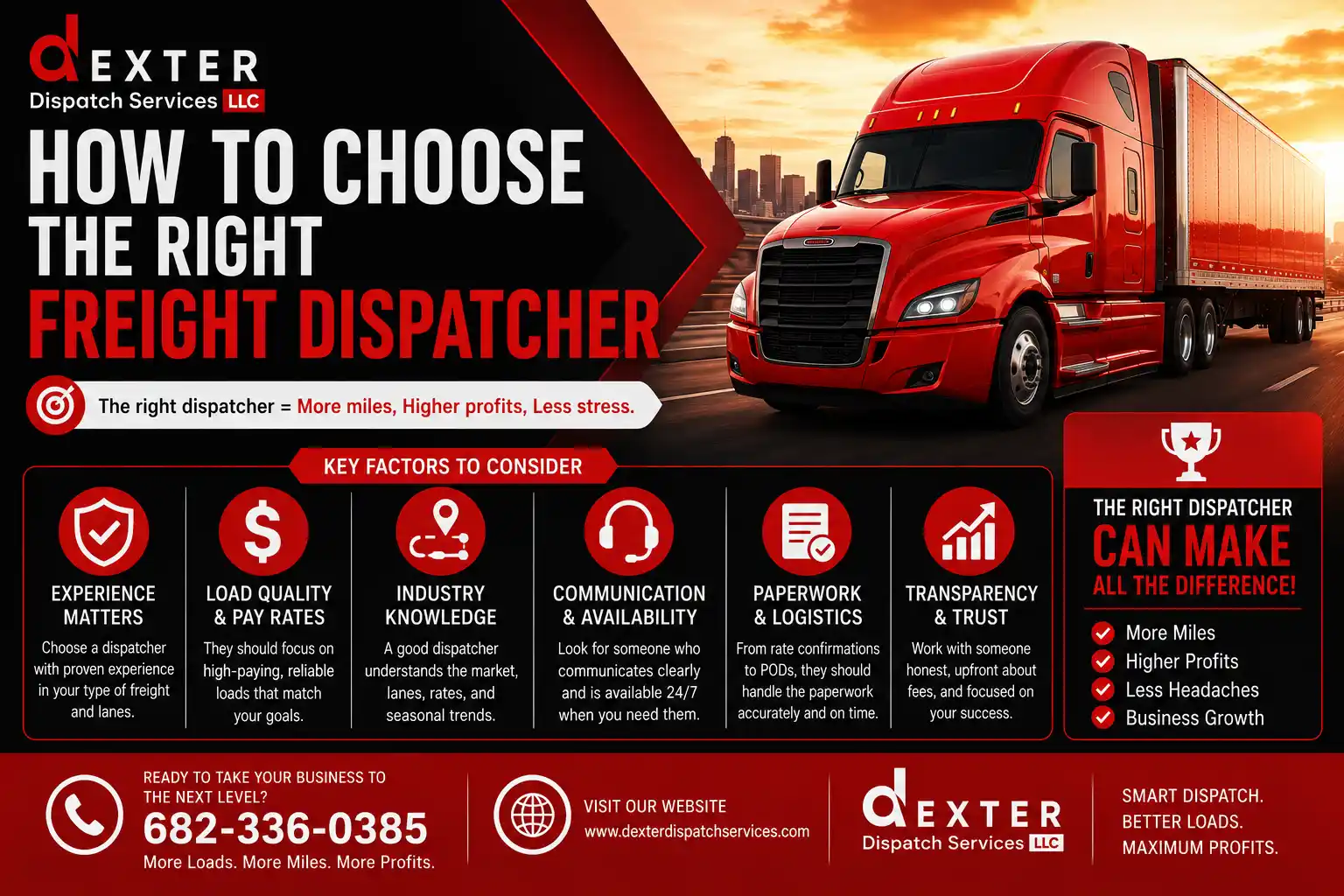
Understand What a Freight Dispatcher Does
Before choosing a dispatcher, it’s important to understand their responsibilities.
A professional freight dispatcher typically handles:
- Searching for available freight
- Negotiating rates with brokers
- Scheduling pickups and deliveries
- Managing load paperwork
- Communicating with brokers and shippers
- Monitoring routes
- Helping solve unexpected issues on the road
Their goal is to keep your truck productive while allowing you to focus on driving safely.
Look for Experience in Your Freight Type
Not every dispatcher works with every type of freight.
Some specialize in:
- Dry van freight
- Flatbed loads
- Reefer freight
- Step deck freight
- Box trucks
- Hotshot trucking
- Power only loads
A dispatcher with experience in your equipment understands the market, knows where to find quality freight, and can negotiate rates that fit your operation.
Ask How They Find Loads
A good dispatcher should be transparent about how they secure freight.
Ask questions like:
- Which load boards do you use?
- Do you work directly with brokers?
- Do you have repeat customers?
- How do you negotiate rates?
- How often do you book loads for your drivers?
A professional dispatcher should confidently explain their process.
Choose Someone Who Communicates Clearly
Communication is one of the most important qualities in a freight dispatcher.
You’ll work together every day, so quick and professional communication matters.
Look for someone who:
- Answers calls promptly
- Responds to messages quickly
- Keeps you updated on load changes
- Explains details clearly
- Solves problems calmly
Poor communication often leads to missed opportunities and unnecessary delays.
Make Sure They Understand Your Business Goals
Every trucking business is different.
Some owner-operators want:
- Higher-paying loads
- More home time
- Regional routes
- Long-haul freight
- Consistent weekly miles
A good dispatcher takes time to understand your priorities instead of booking random loads.
When your goals are clear, they can find freight that matches your schedule and business plan.
Ask About Rate Negotiation
Finding a load is only part of the job.
Negotiating better freight rates is where an experienced dispatcher adds real value.
Ask:
- How do you negotiate rates?
- How often do you negotiate above the posted rate?
- Do you monitor current freight markets?
Even small improvements in rate negotiation can increase your yearly income.
Check Their Industry Knowledge
The trucking industry changes regularly.
Your dispatcher should stay informed about:
- Freight market trends
- Seasonal demand
- Fuel prices
- Broker expectations
- DOT requirements
- Regional freight opportunities
Industry knowledge helps dispatchers make smarter decisions for your business.
Understand Their Pricing Structure
Before signing any agreement, know exactly how the dispatcher charges for their service.
Common pricing models include:
- Percentage of each load
- Flat weekly fee
- Monthly service fee
Ask about:
- Hidden charges
- Contract length
- Cancellation policy
- Payment schedule
Everything should be clear before you begin working together.
Research Their Reputation
Experience is important, but reputation matters just as much.
Before choosing a dispatcher:
- Read online reviews
- Ask for references if available
- Check customer feedback
- Speak with other owner-operators
Positive feedback often reflects consistent service and professionalism.
Avoid Dispatchers Who Promise Unrealistic Results
Be cautious of companies making promises such as:
- Guaranteed high-paying loads every day
- No downtime ever
- Highest rates in every market
- Instant success
Freight markets change constantly, and no dispatcher controls every factor.
A trustworthy dispatcher sets realistic expectations and focuses on consistent performance rather than making exaggerated claims.
Look for Strong Broker Relationships
Experienced dispatchers often build relationships with reliable freight brokers.
These relationships may lead to:
- Better load availability
- Faster booking
- Competitive freight rates
- Reliable payment
- Repeat freight opportunities
Strong industry connections benefit both the dispatcher and the carrier.
Ask About Paperwork Support
Administrative work takes time.
A professional dispatcher often helps manage:
- Rate confirmations
- Broker packets
- Carrier setup documents
- Load information
- Delivery paperwork
Organized paperwork keeps your business running smoothly and reduces administrative stress.
Technology Is an Added Advantage
Modern dispatchers use technology to improve efficiency.
Useful tools may include:
- GPS tracking
- Digital document sharing
- Route planning software
- Electronic communication
- Load management systems
Technology helps reduce delays and improves communication between drivers, brokers, and dispatchers.
Trust and Transparency Matter
You’ll share important business information with your dispatcher.
Choose someone who values honesty and transparency.
They should openly discuss:
- Freight rates
- Broker communication
- Problems with loads
- Scheduling changes
- Business recommendations
Trust is one of the most valuable parts of a long-term working relationship.
Questions to Ask Before Hiring a Freight Dispatcher
Before making your decision, consider asking:
- How long have you been dispatching trucks?
- What freight types do you specialize in?
- How do you negotiate rates?
- How do you communicate with drivers?
- What are your service fees?
- Can I choose the loads I accept?
- How do you handle problems during a trip?
- What happens if freight becomes slow?
The answers will help you compare different dispatch services more confidently.
Signs You’ve Found the Right Freight Dispatcher
A quality freight dispatcher will:
- Understand your business goals
- Communicate consistently
- Find profitable freight
- Negotiate competitive rates
- Respect your decisions
- Keep paperwork organized
- Build strong broker relationships
- Focus on long-term success instead of quick results
These qualities create a productive partnership that benefits both sides.
Conclusion
Deciding on which freight dispatcher to go with is likely one of the most critical choices that an owner-operator makes. A strong partner can help you keep your trucks on the road, secure better freight rates, take care of your daily management challenges, and get you focused on driving safely and becoming more profitable.
Don’t rush; ask the appropriate questions and select a dispatcher who is familiar with your needs, who can communicate clearly, and who has a good reputation in the industry. A reliable dispatch partner can lead to more stable, efficient, and profitable work.
👉 Contact Dexter Dispatch Services at www.dexterdispatchservices.com or call us at [682-336-0385]