
One of the regular and trusted methods of freight transportation in the United States is dry van shipping. A typical enclosed trailer that picks up and delivers goods on highways is a dry van. It contributes significantly to maintaining a smooth performance of supply chains in industries such as the retail sector, manufacturing and e-commerce.
This guide will describe how dry-van shipping works in the USA, including the booking of loads, all the way to final delivery, so you can be informed of how the entire process works, whether you are a beginner, shipper, or trucking expert.
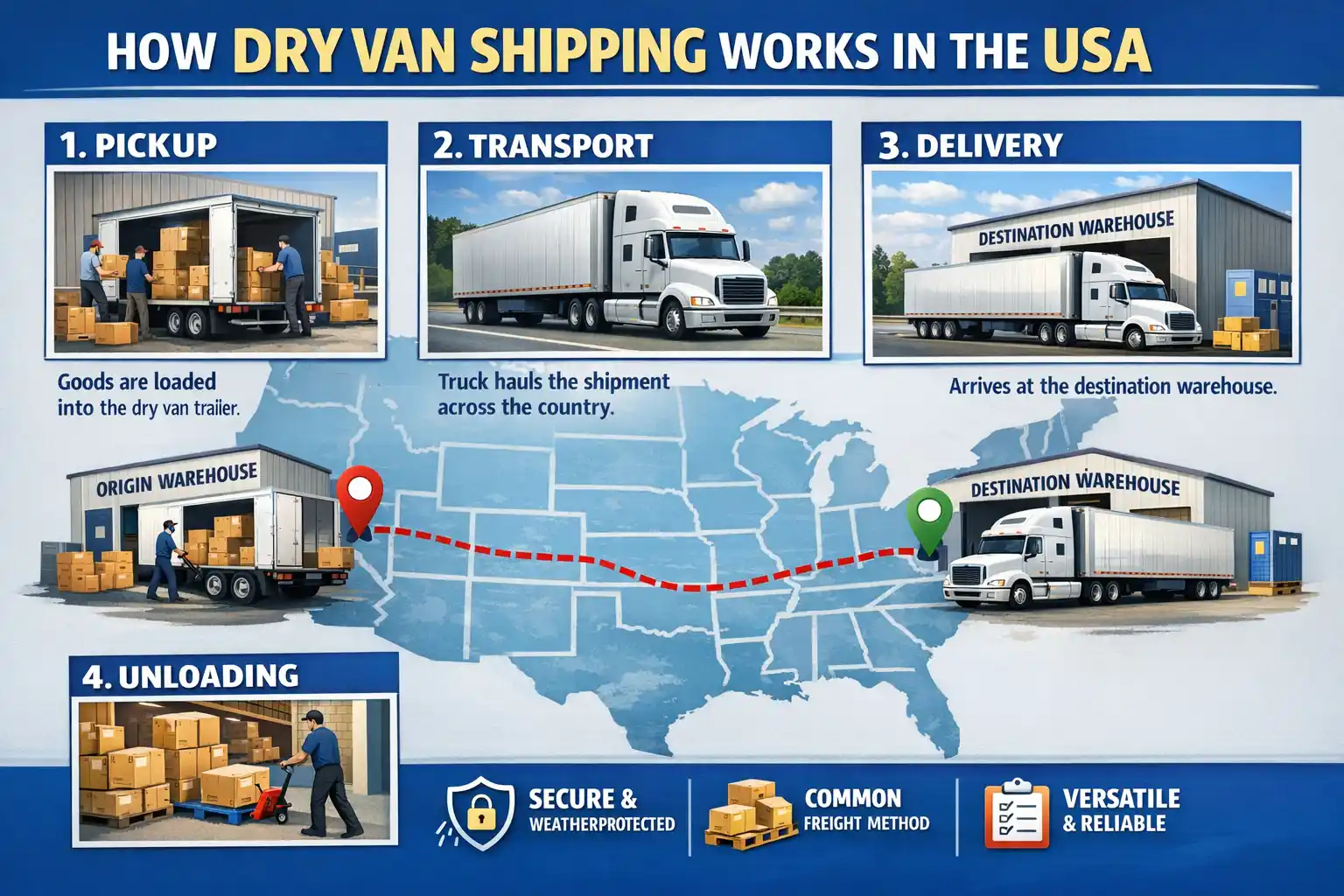
What is Dry Van Shipping?
Dry van shipping means that deliveries are made using a fully enclosed trailer. The purpose of these trailers is to prevent weather damage, theft and external damage of cargo. Unlike refrigerated (reefer) trucks, dry vans lack temperature control and are, therefore, best in non-perishable goods.
Conventional dry van trailers range in length (53 feet) with a maximum weight capacity of 45,000 pounds, depending on the state.
Goods that are transported in dry Vans.
Types of Goods Transported in Dry Vans
Dry vans are versatile and used for a wide range of cargo. Some common goods include:
- Ready-made food products (non-perishable).
- Clothing and textiles
- Electronics
- Furniture
- Household goods
- Retail shipments
- Automotive parts
Dry van shipping normally occurs on anything that does not need temperature regulation.
Step-by-Step Process of Dry Van Shipping
Load Booking
It begins at the time when a shipper has to move a shipment between two places. They can either:
- Get in touch with a freight agent.
- Contract with a dispatch service.
- Search carriers with the help of load boards.
The shipper presents the details such as:
- Location Pickup and delivery Pickup and delivery-Point.
- Weight and dimensions
- Type of goods
- Delivery deadline
On this, a rate (price) is arrived at.
Carrier Assignment
When the load is posted, it is accepted by a carrier (trucking company or owner-operator). The carrier must have:
- An appropriate dry van trailer.
- Proper licensing (MC & DOT numbers)
- Insurance coverage
Dispatchers can undertake this step, as it involves aligning loads with available trucks.
Pickup Process
The shipper receives the driver at his facility (factory or warehouse) where the shipment is loaded. At this stage:
- The goods are put into the trailer.
- Employees provide the correct weight distribution.
- Straps or load bars are used to secure the load.
The motorist is given a Bill of Lading (BOL), which is a vital document that has details about shipments.
Transit and Tracking
Upon collection, the driver takes the goods to where they are received. During transit:
- Tracking via GPS is commonplace.
- Dispatchers monitor progress
- Updates are shared with the shipper
Dry van trucking normally involves the use of major interstate highways in order to take a short time.
Delivery and Unloading
When the truck has arrived at the location of the receiver:
- The cargo is unloaded
- The receiver inspects the goods.
- Proof of delivery is registered through signing the Bill of Lading.
Any shortages or damage will be reported at this stage.
Payment Process
After successful delivery:
- The carrier submits paperwork (BOL, invoice)
- It can be paid directly or via brokers.
Depending on agreements, the deadlines for payment may be a few days to several weeks.
Key Players in Dry Van Shipping
Knowing who is engaged enables you to envision how the system functions seamlessly.
Shippers
Firms that require the transportation of goods. Warehouse breakages generate the demand for shipping.
Carriers
Truck drivers/companies that transport the freight with dry vans.
Freight Brokers
Intermediaries who bridge shippers and carriers and negotiation of rates.
Dispatchers
They assist carriers in locating loads, route management and communication.
Assets of Dry Van Shipping.
The most popular type of shipping is dry van shipping, which is explained by several reasons:
Protection from Weather
The closed trailer protects goods against rain, dust and extreme weather conditions.
Cost-Effective
Compared to specialized trailers, dry vans are more affordable.
High Availability
The number of dry van types is prevalent in the USA, meaning it is not hard to find loads there.
Versatility
They are able to deal with a great assortment of products without any special needs.
Challenges in Dry Van Shipping
Notwithstanding its merits, it has some problems:
No Temperature Control
Inappropriate for perishable or sensitive items.
Loading Delays
Pick up or unloading may at times be delayed at warehouses.
Freight Rate Fluctuations
Rates are subject to change depending on demand, fuel prices and seasons.
Competition
The trucking of dry vans is quite competitive as it has many carriers.
Dry Van Freight Rates in the USA
Prices vary with a variety of factors:
- Distance (miles)
- Fuel prices
- Market demand
- Load weight
- Lane popularity
As a case in point, the demonstration of high-demand flights such as California to Texas or the Midwest to the East Coast tends to be more lucrative.
Rates tend to range over a great distance and depend on many factors.
Best Practices for Successful Dry Van Shipping
For Shippers:
- Give proper load information.
- SHIPMENT: Plan.
- Cooperate with trusted carriers.
For Carriers:
- Keep your equipment in good condition.
- Make good communication with dispatchers.
- Choose profitable lanes
For Dispatchers:
- Find high-paying loads
- Optimize routes
- Establish good relationships with brokers
Technology in Dry Van Shipping
Efficiency has been greatly enhanced by modern technology. It utilizes some tools such as:
- GPS tracking systems
- Electronic Logging Devices (ELDs).
- Load board platforms
- Transportation Management Systems (TMS)
The tools are used to minimize delays, enhance communication and maximize profits.
Future of Dry Van Shipping in the USA
Dry van shipping continues to grow due to:
- Rising e-commerce demand
- Increased retail distribution
- Increase in supply chains.
Even in the near future, automation, AI-related logistics, and more efficient tracking systems will contribute to an even more efficient process.
Conclusion
Freight movement in the USA consists of dry van transportation. Its ease, economy, and versatility make it the best option for transporting non-perishable products.
Between having booked a load and final delivery, it involves several steps and players collaborating to make the operations run smoothly. As a shipper, carrier, or an individual venturing into the trucking industry , knowing the functionality of dry van shipping enables you with a sound platform to succeed.
👉 Contact Dexter Dispatch Services at www.dexterdispatchservices.com or call us at [682-336-0385]