
Load securement is one of the most important safety practices in the trucking industry. Every day, thousands of trucks transport cargo out on highways, and if the cargo is not tied down properly, it can result in crashes, injuries, damage to the load and costly fines. Whether the freight is on a flatbed, in a dry van or on a special trailer, load securement ensures that the cargo will remain in place from pick-up to delivery.
This article discusses what load securement is, how it operates, and why it is important in the trucking business.
What Is Load Securement?
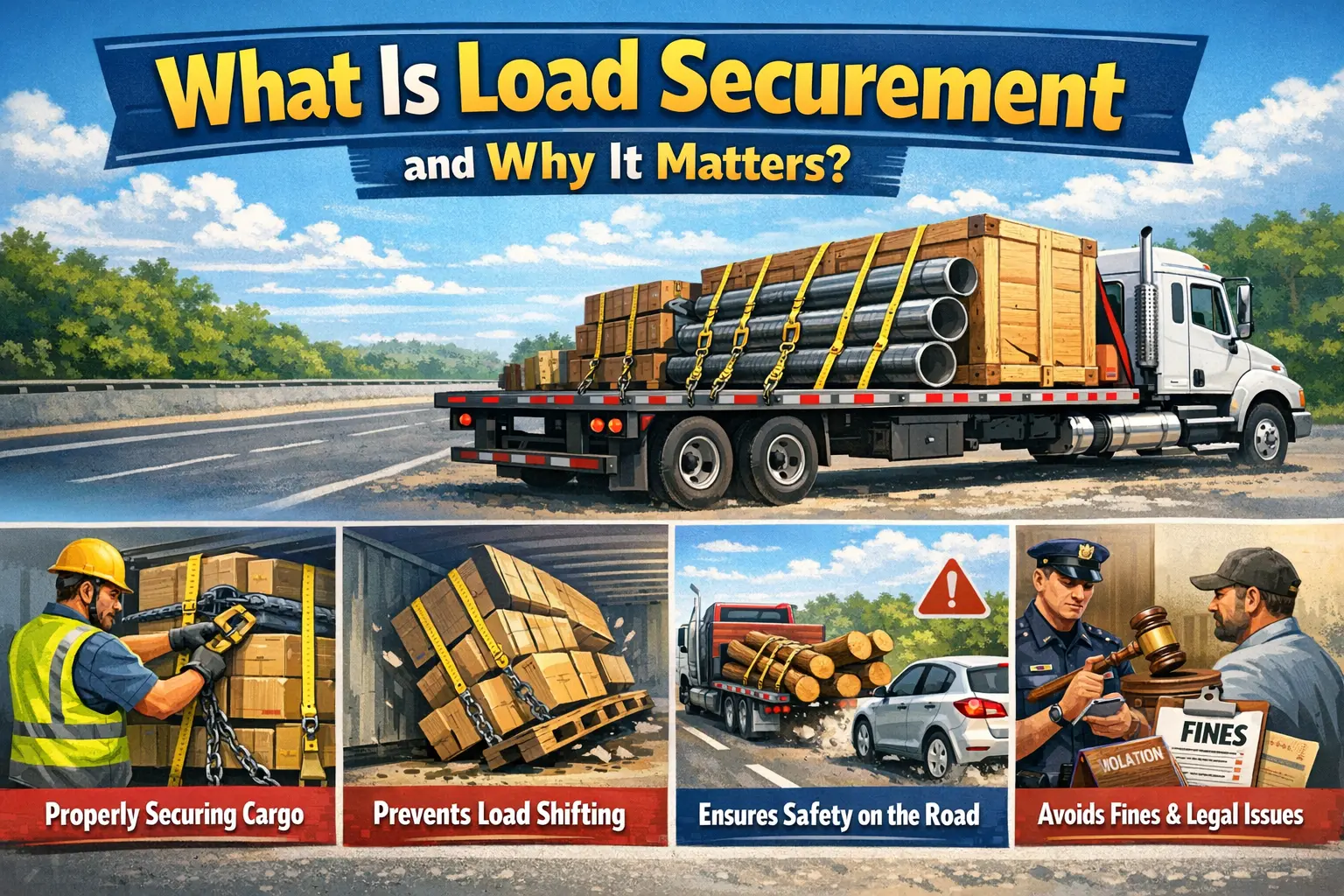
Load securement means the use of tools and methods to prevent cargo loads from shifting, sliding, tipping or falling when traveling. It includes having the proper gear and adhering to the best practices in order to keep the freight steady during braking and acceleration, turning and rough roads.
Load securement applies to all types of freight and trailers:
- Flatbeds
- Dry vans
- Step decks
- Lowboys
- Refrigerated trailers
Why Load Securement Is Important
When loads are not secured, they are a serious safety hazard. Proper load securement helps stop:
- Traffic accidents
- Injuries or deaths
- Damage to the cargo
- Road debris
- DOT violations and fines
- Damage to equipment
- Delivery delays
A single shifted load can result in a rollover, jackknife or falling cargo incident, putting drivers and the public in danger.
What Happens When Loads Are Not Secured Properly?
If the securement of the load fails, the consequences can be severe:
- Freight slides, tips over when taking turns
Cargo can fall off the trailer and fall on the road - Vehicles become unstable
- Drivers may lose control
Other motorists might hit the fallen freight
If unsecured loads had been properly planned for and equipped, many accidents could have been prevented.
Who Is Responsible for Load Securement?
The driver has final responsibility to ensure that the load is properly secured before the trip and during the trip. Even if the shipper loads the freight, the driver must inspect and make sure that it is in agreement with safety standards. Responsibilities usually include:
- Checking of securement devices
- Ensuring the correct number of tie downs
- One of the suggestions they gave us was to anticipate the following points: “Checking weight distribution”.
- Re-checking the load during the trip
Load Securement Regulations
In the US, the load securement rules are set by the FMCSA. These rules are to determine how freight needs to be tied down so that it can’t move in any specific direction.
Federal standards require that the cargo should not shift more than:
- 1 inch sideways
- 1 inch forward
- 2 inches rearward
In such a way that affects the stability of the vehicle
Failure to comply with these rules can result in citations, fine or taking a vehicle out of service.
Common Load Securement Equipment
Different freight requirements require different securement tools. Typical equipment includes:
- Straps – made of polyester webbing, for use mainly on flatbeds, rated by Working Load Limit (WLL)
- Chains – heavy, or steel, goods, usually chained with binders, very strong and durable
- Binders – tighten chains, they come in the lever or ratchet style
- Tarps – prevent cargo from getting wet, and prevent debris from flying off
- Load Bars – used in dry vans to hold palletized freight from moving
- Edge Protectors – keep straps from being damaged and provide protection for the edges of the cargo
Working Load Limit (WLL) Explained
Every securement device has a Working Load Limit, which is the maximum weight that it can safely hold. Regulations impose the limitation that the total WLL of all the tie-downs should be at least 50 per cent of the weight of the cargo. For example: a 20,000 lb. load requires a minimum of 10,000 lb. of sum of WLL. Too low equipment rating is a common violation.
Load Securement on Flatbed Trailers
Flatbeds require the most attention as the cargo is exposed and there are no walls. Typical flatbed securements are:
- Multiple straps or chains
- Proper spacing of tie‑downs
- Edge protection
- Tarping when needed
Flatbed drivers also need to monitor the load: before departure, after the first 50 miles and every so often during the trip.
Load Securement in Dry Vans
Dry vans are enclosed; however, security is required. Typical dry van securement could be:
- Load bars
- Blocking and bracing
- Proper pallet positioning
Increased safety features may include Balanced weight distribution.
Inside a dry van, even when it is unsecured, the shifting can occur, damaging the cargo or the trailer itself.
Common Load Securement Mistakes
Typical mistakes include:
near shoes: “you’re wearing too many straps chaining me to the bolts” or “there are too many chains”.
- Ignoring WLL requirements
- Poor weight distribution
- Failing to re‑check loads
- Worn or damaged equipment
- Improper tarping
These types of errors are the reason for violations or accidents.
Weather and Load Securement
Changes to the weather affect the security of a load:
- Rain can loosen straps
- Snow and ice add weight
- Wind can stress tarped loads
Strap Tension Applies Heat Effect on Strap Tension.
Drivers must change their methods to suit the weather and recheck loads more frequently.
Safety Benefits of Proper Load Securement
When load securement is done right, it:
- Improves vehicle stability
- Lowers accident risk
- Protects cargo
- Prevents legal problems
- Enhances public safety
Developing that credibility as a professional
Good securement is good for the driver and everyone else on the road.
Load Securement and Inspections
Owning a car gives officers a look at:
- The number of tie‑downs
Factors Affecting Containment: Tension, the Tensioning of Straps/Chaining, Unacceptable Visual Condition, Condition of Strap/Chain worn out, Allen Organs Used: Are You Contained? Preventing Containment Unrestricted.Factors Affecting Containment: Tension, the Tensioning of Straps/Chaining, Unacceptable Visual Condition, Condition of Strap/Chain worn out, Allen Organs Used: Are You Contained? Preventing Containment Unrestricted. - Proper placement
- WLL compliance
- Overall load stability
Violations can lead to:
- Fines
- Safety points against the driver’s record
Orders to put the vehicle out of service
Why Load Securement Truly Matters
Load securement is not only a rule, but it is a major safety duty. Every secured load properly reduces the risk of crimes and diverts crashes, injuries, and emergencies. In an industry that depends on safety and efficiency, load securement is essential to keep freight moving safely.
Final Thoughts
Knowing what load securement is and its importance is key to anyone who works in trucking or logistics. Whether hauling steel on a flatbed or pallets in a dry van, good load securement is a life, cargo and business-saving.
👉 Contact Dexter Dispatch Services at www.dexterdispatchservices.com or call us at [682-336-0385]