

One factor that makes a big difference in the pricing of shipments is the dimensional weight. But what is this term referred to? If you’re an owner-operator or small fleet, DIM weight is very important to you, as it can facetiously be eating into your genuine profit – in spite of the rate appearing good on paper.
Dimensional weight is a pricing technique used to measure the volume a package takes up comparing to its actual weight this is known as the weight formula. Unlike traditional measures of weight, dimensional weight takes into account the physical dimensions and weight of items and is therefore important that you know how to get weight correct. Consequently, establishing the dimensional weight of something and consequently the shipping cost can be a challenge, especially when it comes to package dimensions.
Whether you are operating shipping operations on your own, or whether you work with a third-party logistics provider (3PL), it is important that you are familiar with dimensional weight in order to prevent shipping charges from being mistaken. Dimensional weight is important to understand to get the pricing done correctly, especially when dealing with a shipping weight.
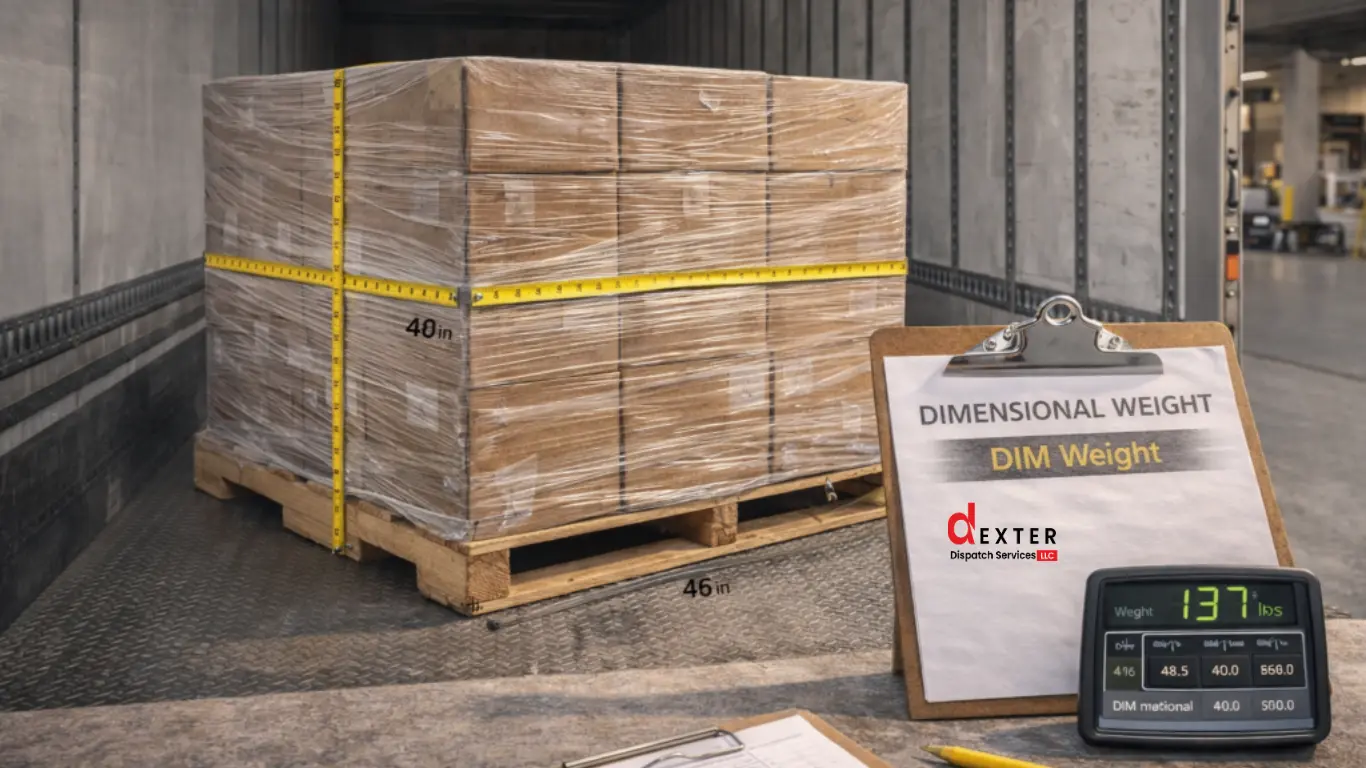
In this blog post, we’ll discuss what dimensional weight is, how it’s calculated, how DIM weight pricing works, and some of the implications it has on shipping costs.
Please continue down to get a full understanding about dimensional weight and how it affects price.
DIM pricing involves using DIM when calculating the total cost of shipping a package. If the DIM weight exceeds the actual weight of the item, it would be used to calculate the shipping cost, hence it demonstrates the importance of the DIM weight in the shipping cost calculation formula.
Historically, prior to 2015, shipping companies had based on their shipping costs a simple equation. This formula mainly took into account the weight of the item and the distance it had to travel but it did not take into account dimensional weight or package dimensions. The heavier it is and the longer the distance, the more the price of shipping it. However, in the last few years, major carriers have added a third factor to their pricing equation: the size of the item shipped.
When we send something light-overweight in huge boxes, these huge packages take up precious storage space in transit, hence the importance of dim weight and package dimensions. Consequently, DIM Pricing has evolved, which includes the volume of the package in the calculation of shipping costs.
What is dimensional weight?
Dimensional or DIM weight is a pricing method that is employed in commercial freight transportation such as courier and postal services. It is calculated by the multiplication of a package’s length, width and height.
Given the limited space available on delivery trucks, dimensional weight takes into account the density of the package in order to determine how to charge for shipping. Therefore, even if a package is light, it may be useful to calculate the DIM weight.
Freight Carriers like USPS, Fedex or UPS, when determining shipping charges, use whichever is the better value of the actual weight of the package, and its calculated dimensional weight. The larger of the two is considered the billable weight as far as shipping is concerned.
Why DIM Weight Matters for Trucking Profitability
Dimensional weight pricing is popular in parcel shipping and courier shipping, but the principle is notable in trucking and dispatch decisions as well; space and efficiency mean economy.
If the freight is bulky or not packaged or occupied by the value it brings, it can result in:
- lower profit per mile
- wasted trailer/box space
- increased handling costs or extras They know.
The objective is simple: have the load pay for the space it occupies. And if you are still in the process of stockpiling your weekly maths, here’s a key simple guide to work out cost per mile, to spot low-profit freight much quicker.
How to calculate dimensional weight (DIM weight)
To calculate the dimensional (DIM) weight, follow the steps below:
Step 1: Measure the length, the width, and the height of the package, using the longest portion of each side, taking into consideration any irregularities on it, such as a bulge or misshapen sides. This ensures precision in calculation, as well as avoids unexpected fees for special handling.
Step 2: Round up the measurements nearest whole number as requested by most shipping carriers in order to calculate the dimensional weight.
Step 3: Multiply the dimensions of the package to get the size of the package in cubic form. For instance, if the dimensions of the package are. 30 inches by 12 inches by 12 inches, then the size of its cubic dimension would be: 4,320 cubic inches.
Step 4: Finally, divide the cubic size of the package through a dimensional factor, otherwise called as DIM divisor. These divisors are set in advance by major freight carriers such as UPS and FedEx and are cubic inches per pound in size. Calculating the equation provides the dimension weight in pound.
The DIM divisor that FedEx presently uses for instance for domestic and international shipments is 139 cubic inches per pound. Going back to our example above you would divide 4,320 by 139 to get a dimensional weight of 31 pounds. So to give this example, here’s how the shipping carrier would charge for the package:
- If the actual weight of the package is less than 31 pounds. (e.g. 29 pounds) The carrier will be charging for the dimensional weight of 31 pounds since it is a more significant number.
- If the actual weight of the package is more than 31 pounds (e.g. 33 pounds), dimensional weight pricing will use the actual weight – not the dimensional weight, as they are essentially charging for the value of the most significant figure.
How We Can Help You?
Understanding DIM weight is one piece of the bigger picture therefore: choosing loads that will actually make sense to the truck you have as well as the week you have.
At dexter dispatch services , we assist owner operators and small fleets to avoid “good looking loads” turning into low profit runs by supporting:
- plan of loading and lane strategy
- rate confirmation review (so that you know what you are agreeing to)
- broker communication and load coordination;
- Minimizing the amount of downtime between loads
If you are needing a second set of eyes on your selections of load and week-to-week plan then contact us as we will help build you a more predictable dispatch routine.
👉 Contact Dexter Dispatch Services at www.dexterdispatchservices.com or call us at [682-336-0385]