

Most discussions about trucking costs per mile begin too late in the process.
They usually start after the week is over, when the fuel receipts are added up, maintenance is planned, or the numbers don’t quite show how busy the truck was. At that point, drivers and operators look back to figure out where the margin went. But in real life, the cost per mile is almost never decided on the road.
The process of selecting, ordering, and positioning freight influences the cost per mile from the outset, albeit in a subtle manner. In other words, the cost per mile is influenced by decisions regarding dispatch and operations that are made before the wheels start turning.
This article doesn’t tell you how to figure out the cost per mile.
It’s about why the number that most drivers come up with for stops doesn’t match reality when real-world trucking operations come into play.
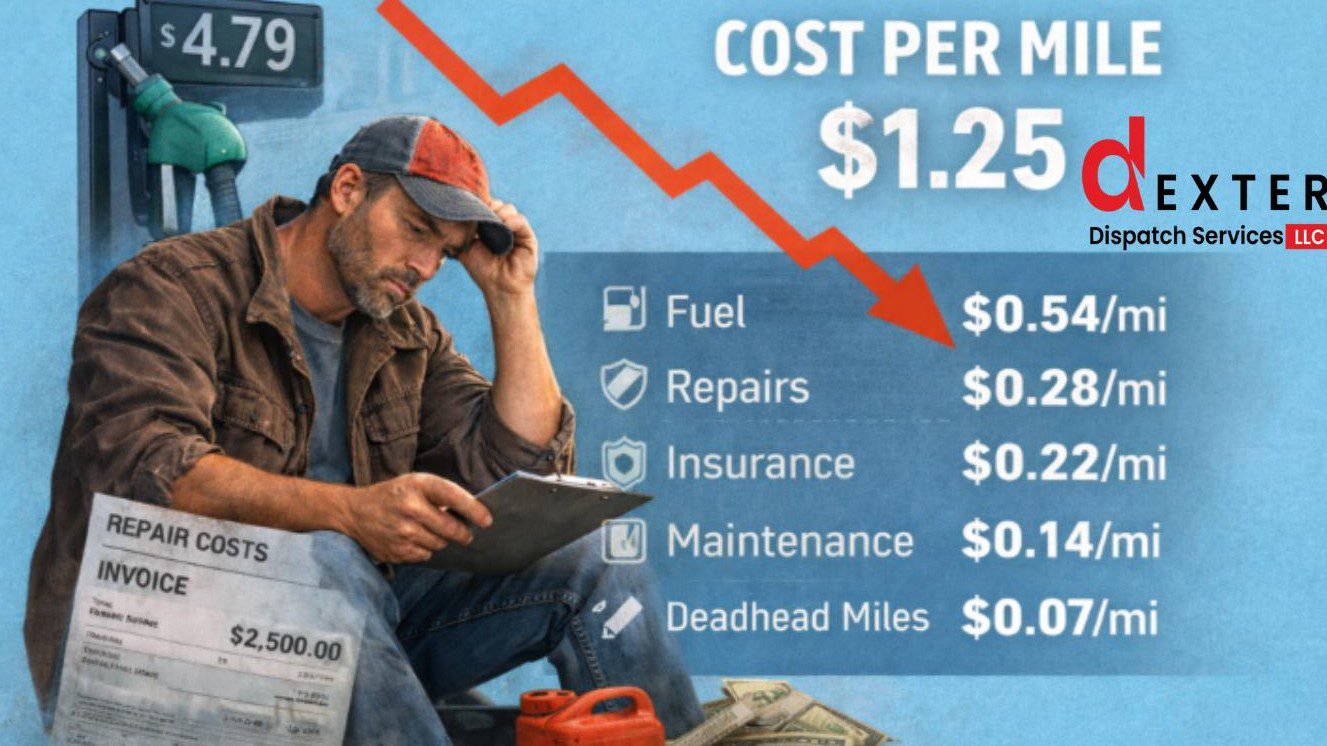
Cost per mile is an outcome, not a formula
Cost per mile seems simple on paper. Add up the costs, divide by the miles, and set a limit. That math is important, but it doesn’t explain why two trucks with similar costs can get very different results over the same time. Most of the time, the difference isn’t effort. The way it is built.
From a business point of view, cost-per-mile trucking economics show the overall effect of choices made before accepting a load, such as where the truck is parked, how it leaves a market, and how many deadhead miles it needs to stay productive.
By themselves, those choices don’t seem like they cost a lot. Over time, they quietly set the standard for trucking profits.
Where cost per mile quietly escalates
One bad load doesn’t usually cause most of the margin erosion. It comes from patterns that seem right at the time:
- Taking freight that pays “fine” but ends up in weak outbound markets
- Putting urgency ahead of lane strategy
- Seeing deadhead miles as the price of staying busy
- Putting loads in order without thinking about recovery mil
None of these options seem deadly. Together, they raise the effective cost per mile of trucking without setting off any alarms right away.
This is why a lot of owner-operators feel busy but don’t have enough money. The math is not wrong; it is just missing something. Even when freight keeps moving, industry analysts have repeatedly pointed out the gap between freight rates and actual profits in trucking.
What this looks like in a real week
Think about a single box truck that does regional freight. This is a common setup for owner-operators.
Dispatch decision-making comes into play when they examine two loads on Tuesday morning.
Load A pays $1.62 for each mile it is loaded and delivers to a strong outbound market.
Load B pays $1.65 for each mile loaded, but it only goes to places where there aren’t many options for reloading.
On paper, both loads are above the truck’s known cost per mile floor. Later on, the difference shows up. Fuel prices are already hard to predict. Before making any dispatch decision, the U.S. Energy Information Administration monitors diesel prices, which fluctuate weekly.
The truck reloads within 40 miles of Load A’s delivery. The total amount of unpaid movement for the week stays below 100 miles. The truck sits after Load B is delivered. By Thursday afternoon, the only way to reload that works is to move the truck 220 miles without getting paid.
Everything went well. No poor broker. Not a poor rate.
But by the end of the week, that change in position quietly adds more than $0.20 per mile to the truck’s effective trucking cost per mile, and no single load looks bad on its own. This is how the cost per mile goes up without anyone noticing: not because of one mistake, but because of the order in which things happen.
Not only does one unpaid or fake load hurt your cash flow, it also quietly raises your cost per mile. So, checking the people you haul is as vital as checking the rate.
Why staying busy doesn’t guarantee trucking profitability
People often think that high use means efficiency.
If a truck has a lot of unpaid or poorly placed miles, it can stay loaded all week and still not do well. In those situations, the paid miles have to pay for things that aren’t their fault.
Owner-operators often say they need one more good load to make the week better. The week wasn’t underpaid; it just wasn’t very well organized.
The cost per mile didn’t go up because costs changed. It changed because the way miles were added up was different.
Cost per mile as an operational boundary
When we solely consider cost per mile as an accounting metric, we only consider it once the week has concluded.
When cost per mile is viewed as an operational boundary, it influences dispatch decisions earlier. Rate isn’t the only thing that matters when judging loads. People look at them in context, like where the truck is going next, how clean the exit looks, and whether the lane strategy makes sense.
At that point, the math for cost per mile trucking stops being just a theory. It turns into a limit that actively affects behavior.
Why disciplined trucking operations often look conservative
Operations that focus on keeping trucking costs per mile low don’t usually look aggressive. They give you freight that almost works. They stay away from lanes that have a history of trapping trucks. Instead of going after volume, they protect exit options.
From the outside, this may seem careful. In the long run, that’s what keeps trucking profitable.
The goal isn’t to grow quickly. It’s the fact that things are more predictable: there are fewer surprise weeks, fewer decisions made under pressure, and fewer miles that quietly throw off the math.
Where dispatch fits in
It’s only half the story to know how much it really costs you per mile. The other half is whether the choices made for you respect that number.
Dispatch isn’t just about keeping the truck moving at all costs. It’s about arranging freight in a way that keeps your floor safe by cutting down on unnecessary deadhead, avoiding weak exits, and passing on loads that look good on paper but make the week weaker in practice.
Dexter Dispatch Services works with owner-operators who already know their numbers and want help making sure they constantly follow them. It’s not about how much or how quickly you need it; it’s about picking the right freight, using lane logic, and making decisions based on actual operating costs.
If you know how much it costs to drive a mile and want dispatch to work with that, not against it, Dexter Dispatch Services is the right choice for you.
👉 Contact Dexter Dispatch Services at www.dexterdispatchservices.com or call us at [682-336-0385]