
Operating a reefer truck takes more than driving skills. Load securing is an important component of the safe transporting of temperature-sensitive goods. Improperly secured cargoes can cause cargo damage, potential safety hazards, legal problems and financial losses. In this guide, we’re going to break down some of the tools, techniques, and best practices that every reefer truck driver, owner-operator, and dispatcher should be familiar with.
Introduction to Reefer Load Securing
Reefer trucks are made to move goods that are sensitive to temperature, including the following:
- Frozen foods such as ice cream, frozen seafood and meat
- Fresh food (fruits and vegetables)
- Pharmaceutical and Medical Supplies
- Beverages and liquids
If loads are not properly secured, they can move, fall or become damaged, causing the following:
- Spoilage of temperature-sensitive cargo
- Accidents because of unstable weight distribution
- Legal fines for noncompliance with transportation regulations
Proper load securing is what makes sure your freight is safe, stable, and in compliance throughout the voyage.
Types of Reefer Loads and Their Securing Needs
Different types of cargo call for different methods of securing:
- Frozen Foods – Must be stacked with care, with the heavier on the bottom and lighter on top. Use load bars and straps to ensure no shifting during transit.
- Fresh Produce – Fragile to crushing; pallets and anti-slip mats are a good way of protecting difficult things. Proper airflow is necessary in order to avoid spoilage.
- Pharmaceuticals and Medical Supplies Often these products have stringent temperature monitoring requirements. Secure each box or container separately to prevent movement from happening, and the cold chain is secure.
- Beverages and Liquid Products – Characteristics: Spring water or ice – lidded beverages or juice bottles – Juice boxes with snap-together lids – Anti-spill trays or trays with holes – juice bags – water filter packets – small plastic items dipped with chocolate using packaging assistance – chocolate has labels and dates stamped. Make sure that bottles and cans are packed tightly so that they do not move.
Essential Tools for Securing Reefer Loads
Utilisation of the appropriate tools is important for safe and efficient cargo transport:
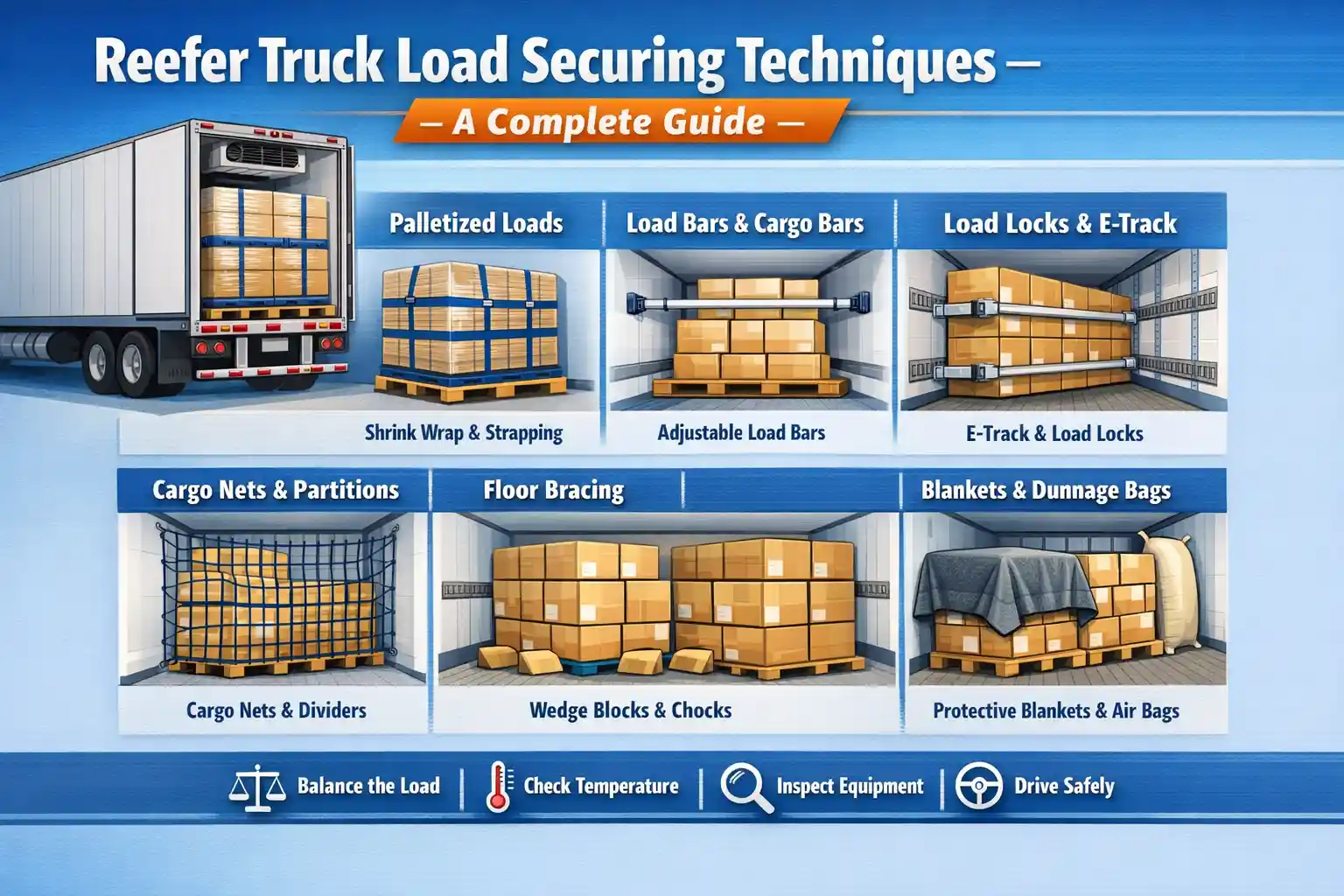
- Straps and Ratchets – Necessary to hold heavy pallets or crates in position. Secure tension tightly to avoid pressure points in the cargoes.
- Load bars and cargo nets are useful to stop large things from moving or sliding about in sudden stops.
- Anti-slip Mats and Dunnage – To prevent cargo from sliding, anti-slip mats and dunnage are used, and they absorb vibration from cargo in transit.
- Corner Protectors – Cover edges of cargo from trauma of the straps to stop tearing or causing crushing.
Having these tools in good condition is the key to maximum protection of cargo and safety of the driver.
Step-by-Step Load Securing Techniques
Here’s how loads in a reefer truck should be attached step by step:
- Inspect the Trailer – Before starting to load, inspect the trailer to ensure that it is clean, dry and free of debris. Moisture or dirt can cause a decrease in the amount of traction and lead to slipping.
- Arrange Cargo for Stability – Layers Heavy items at the bottom, light items on top. This allows the centre of gravity to be reduced and tipping prevented.
- Use Straps and Load Bars Properly – All cargo bars/rows should be fastened with tight straps and/or load bars. For these reasons, leave no space for movement in any gap.
- Distribute Weight Evenly – Ensure that weights are distributed evenly at all the axles. Uneven weight distribution may lead to handling problems and even fines for overloading.
- Check Temperature Zones – Different products may require different temperature zones inside of the trailer. Keep frozen in the coldest area and chilled in its appropriate areas.
Special Considerations for Temperature-Sensitive Loads
Sensitive goods need any special care:
- Avoid Hot or Cold Spots – balance cargo so that there is air space around each pallet for airflow. Poor flow of air can lead to uneven cooling/freezing.
- Securing Liquid vs. Solid Loads – Liquids may need spills to be contained or brought in a shrink wrap again; solids may need stacking techniques for fear of crushing.
- Layering Frozen Goods – Layer goods with separation boards so that frost damage or sticking between pallets will be prevented from occurring.
Safety Tips for Drivers and Load Handlers
- Inspect Cargo Regularly – During long trips, take time to check the straps and load bars and check if they are loose.
- Proper Loading and Unloading – Make sure cargo is secure before driving and handle carefully during unloading of cargo.
- Follow Legal Guidelines – Follow DOT and FMCSA guidelines for load securing, load weight limits and temperature requirements.
- Training and Awareness – The drivers and loaders should be trained for the proper securing techniques and in case of emergency.
Common Mistakes in Reefer Load Securing
Many drivers make preventable mistakes which can lead to an accident or a cargo loss:
- Overloading will allow an uneven weight distribution.
- Using worn-out, broken, loose or worn straps
- Neglecting temperature zones or air movement requirements
- Stacking fragile items in the wrong way
Avoiding these mistakes would ensure your freight would be safe, compliant and undamaged.
Conclusion
Proper reefer truckload securing is very important for:
- Cargo Safety – Decreases spoilages and damages
- Driver Safety – Avoids accidents because of shifting loads
- Regulatory Compliance – Will meet DOT/FMCSA requirements
With the use of such techniques and by having the right tools at your disposal, you can ensure refrigerated transportation is done efficiently, safely and profitably.
Remember, the key to happy customers and a successful trucking business is a load that is well secured.
👉 Contact Dexter Dispatch Services at www.dexterdispatchservices.com or call us at [682-336-0385]