

Power-only credit sounds like the least “dirty” money in the trucking industry. No renting, no upkeep, and no empty trailer coming back home. You own the tractor, and someone else owns the freight box, but you’re paid to move it. In theory, it’s just profit. In reality, the life or death margin is many miles away from the trailers, and that’s where nobody quotes you.
Power-Only Looks Like Pure Margin. The Bobtail Says Otherwise.
This is the part that the rate doesn’t indicate. The loaded trailer is paid for. There’s no such thing as being paid to drive over and get it. No money drops for dropping it and bobtail to the next. All hook-ups have a dead leg in front of them.
On a dedicated drop and hook lane, those dead legs aren’t so bad, and the math is basically correct. On one-off power-only loads, it can burn 60 deadhead miles and be paid for by 200 loaded. That’s not a good load. That is a 30% haircut that you committed to, prior to rolling.
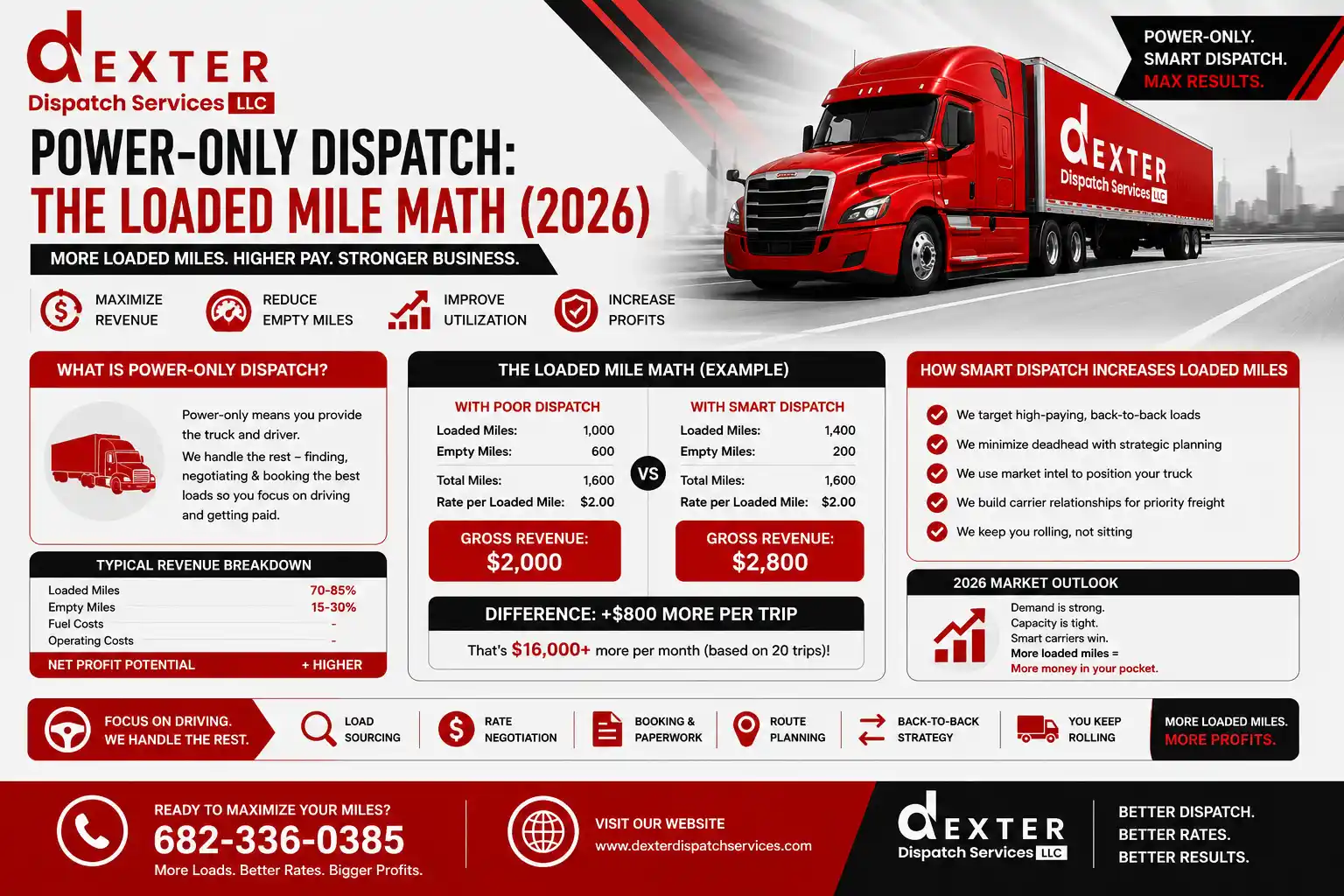
What Power-Only Actually Pays You For
This is the part that the rate doesn’t indicate. The loaded trailer is paid for. There’s no such thing as being paid to drive over and get it. No money drops for dropping it and bobtail to the next. All hook-ups have a dead leg in front of them.
On a dedicated drop and hook lane, those dead legs aren’t so bad, and the math is basically correct. On one-off power-only loads, it can burn 60 deadhead miles and be paid for by 200 loaded. That’s not a good load. That is a 30% haircut that you committed to, prior to rolling.
Where the Loaded-Mile Math Breaks
It breaks between the drop and the clip of the hook. A power-only week can have lots of loaded miles and yet not see the light of day since the unpaid miles have accumulated where they weren’t searched for.
- Bobtail-legged alignment is a sufficient distance away to reach the next available trailer.
- Trailers that don’t prepare for the time you come, therefore the clock is restricted to charge for free.
- Pull away yards from your lane, which takes you out of position for the reload.
- Repositioning on your own account after completion of a one-way load, also known as “cold load.
All that is not reflected on the rate confirmation. All of this reflects on the settlement.
The Drop-and-Hook Trap
The dropping and hooking is presented as speed. Swap and go – no waiting to load and no waiting to unload. With proper management of the trailer pool, that’s true. If it isn’t, then you’re absorbing it.
Arrived at a preloaded trailer not yet built. Or it can’t be located in the yard. You have a load, and it was supposed to save you time, but with no detention clock, you all agreed to. Its speed was picked up by the shipper. It came to you with a wait.
What a Dispatcher Watches on Power-Only
The overall play is maintaining the bobtail short and the truck position. It’s a planning job, not a booking job.
It is aligning up the next trailer before the dead leg will drop the current trailer – it’s measured in miles, not in hours. It’s about not chasing a single bright lane into a dark corner, where lots of trailers are parked. It means to make sure that the trailer is indeed ready. Power only rewards the operator whose week is structured around the hookups, and not the one who is “stimming” one after the other. It’s that planning that separates a clean margin from a busy week that goes underpaid—and it’s the heart of the matter of what dispatching trucking services should provide.
The Number to Check Before You Take the Next One
Lead out last 10 loads for power. The bobtail and miles have to be added to the loaded miles, and then the pay is divided by the loaded miles. That is your real cost per mile — not the cost on one of the rate sheets. If these two numbers are quite different from each other, the difference between the two is the amount the bobtail took.
Conclusion
While power-only dispatch can offer significant earnings potential in 2026, it requires more than just targeting high-paying opportunities — it’s about mastering loaded mile mathematics. Before taking any load, owner operators must estimate loaded miles, deadhead miles, cost of fuel, trailer access fees, and detention time. There are many times when the load on paper is an attractive choice, but then hidden costs take their toll, and profits are lost. Combined with the experience of their skilled dispatchers, who know how to minimize empty miles, power-only carriers can attain a more efficient operation, safeguard margins, and create a more sustainable operation in today’s freight market.
👉 Contact Dexter Dispatch Services at www.dexterdispatchservices.com or call us at [682-336-0385]