
Purchasing a truck is among the biggest choices of any owner-operator or a person who funds the trucking business. It is not merely being selective of a car; it is the basis of your livelihood that you are picking. The truck that you purchase will directly have an impact on your monthly expenditure, whether you are reliable on the road and to what extent you make a profit at the end of the day.
A question most drivers will one time or another, ask themselves is whether to purchase a new truck or a used one. There is no general solution. It will rely on your budgetary position, your business scheme and the level of risk you can undertake.
We are going to simplify it, unravel it, into the simplest and most practical manner, so you can make a decision that really suits you and not one-size-fits-all.
Understanding the Real Difference
The difference would appear so on paper. A new truck is new and has zero miles, with a complete warranty. A truck with a used truck has been on the road previously and already has some wear and tear.
However, in the actual trucking life, the choice is not that straightforward.
The reason is that with a new truck, you are assured of peace of mind, fewer breakages and more fuel efficiency. A second-hand truck means that you will pay less up front and get into the business much quicker.
And the question is not which is better, but which is better now.
Why New Trucks Attract Many Drivers
The new truck seems to be a safer option, particularly for first-time owners. Everything is fresh. You need not fear about past degradation, concealed mechanical problems or unforeseen repair during the initial few months.
Reliability is one of the greatest benefits. New trucks have lower chances of breakdown, hence fewer delays and lost loads. This can make a tremendous difference to anybody dealing with a tight delivery time.
The other benefit is fuel efficiency. Newer engines are constructed according to current standards, hence they tend to have high mileage. This can save you a lot of cash on fuel in the long run.
Warranty coverage is also available. In case there is an issue during the initial years, it can be repaired, and this safeguards your cash.
However, all this is a price. The new trucks are costly. The total monthly payments may also be significant, and the insurance is generally more expensive, too. This is a strain to many owner operators, at least during the first year when the revenues remain volatile.
The Reality of Buying a Used Truck
Second-hand trucks are famous due to one single reason: increased initial cost reduction. Entering the business of trucking takes only a lot less investment than a new truck.
This provides you with leeway. You will have more money to have on hand that will not be tied up, like a lot of your capital in one truck, to refuel, maintain, allowances, and emergencies.
This is the wiser place to start, with many independent drivers.
There is, however, the risk of used trucks. You are purchasing something that has been used, at times, abused. Although it may appear to be okay on the surface, mechanical problems may manifest themselves in the future.
The largest issue is repairs. Any one hustle may cost you money and days of missed revenues. The time out can be even worse than the bill to fix.
It is also unclear how the previous owner handled the truck. Problems can manifest themselves soon in the case of improper maintenance.
Cost Comparison That Actually Matters
Comparing a new and a used truck, people tend to consider only the purchase price. And that is not all.
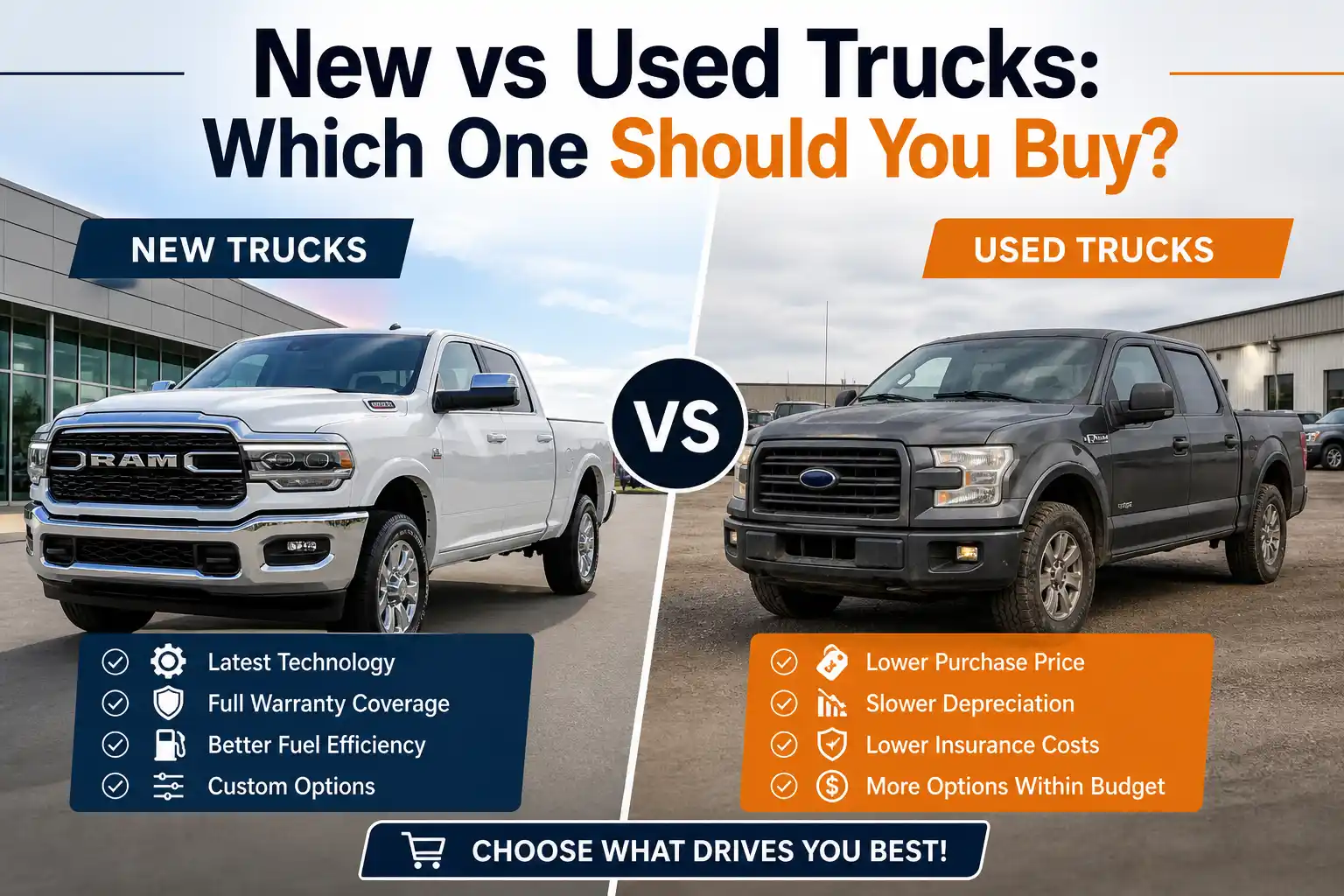
A new truck has:
- High monthly payments
- Reduced maintenance expense (first years)
- Better fuel efficiency
- Reduced risk of breakdown.
A used truck has:
- Low purchase price
- Higher maintenance risk
- Possible fuel inefficiency
- Reduced monthly financial strain.
The actual comparison is thus between high-cost stable vs flexible lower risk.
Assuming that your business can comfortably stay on fixed high payments, a new truck might be effective. A used truck can also be more appropriate if you are looking to be flexible and you are willing to have greater control over the cash flow.
How Risk Changes Your Decision
The risk tolerance is a significant factor in this decision.
The new truck has operational risk reduction. You do not have to worry as much about issues that interrupt your income rates.
An old truck makes it more risky, yet allows you a speedy entry into the market. It is an option that many drivers take when they desire to begin to gain faster without being burdened by debt in the long term.
These are best understood by what you are learning about yourself. A new truck can be safer in case a malfunction severely impacts your business. Used may be more suited in case you can afford to do some repairs periodically, and you do not experience the stress of having to pay high monthly bills.
Hidden Costs Most People Ignore
A lot of novice drivers are just concerned with the price of the trucks and overlook other expenses important to them.
For new trucks:
- Higher insurance premiums
- Increased accelerated depreciation.
- Expensive dealership servicing
For used trucks:
- Frequent repairs
- Higher maintenance unpredictability
- Potential engine or transmission problems.
- Reduced resale value stability.
These internal expenses tend to determine the real profitability of a truck or otherwise.
Financing and Business Growth
Financing is also important in case you want to develop long-term.
Dealerships find it easier to fund new trucks, but need a better credit score and an increase in the monthly payments. Sometimes, used trucks are cheaper to purchase initially, but may have a higher interest rate based on the condition and the lender.
Business-wise, most owner operators commence with used trucks, then level the income before upgrading to new trucks later, when the cash flow is stable.
This is quite a typical trend in the business.
What Experienced Drivers Usually Do
You will observe a trend when you talk with seasoned drivers. Most of them do not adhere to a single decision.
Others begin with used trucks in order to minimize the risk. After they become familiar with the market and generate a stable income, they will upgrade to new trucks to have more efficient and reliable trucks.
Others simply go to new trucks in case they already have contracts or assured freight.
It does not matter what other companies are doing, but what is appropriate to your current level of the business.
How Dispatch Services Connect to This Decision
When you are using a dispatch service such as the one offered by dexterdispatchservices.com, your truck.
A dispatching service will assist you in locating loads, but your truck will decide how you can comfortably complete those loads.
For example:
- A good truck minimizes missed deliveries.
- Fewer breakdowns imply improved load consistency.
- Efficient trucks lead to a minimization of the fuel price per mile.
Even your best dispatch service cannot help you maximize your income in the event that your truck spends most of the time in the shop.
This is why the choice of trucks and the strategy of dispatch should not work independently.
Conclusion
The New vs used trucks is not purely a financial choice, but it is a business strategy choice. The benefits of a new truck are stability and peace of mind, but it comes with an increased investment. An old truck makes your life easier with its flexibility and immediate access, but creates exposure to danger and uncertainties in maintenance.
Not to decide the influence of emotion or pressure, but your actual business state is the wisest move.
When you match your truck selection with your budget, risk tolerance and your dispatch strategy, you will have a significantly better opportunity to get a stable trucking business rather than a business that is hindered by frequent breakdowns or financial strains.
👉 Contact Dexter Dispatch Services at www.dexterdispatchservices.com or call us at [682-336-0385]