

Hotshot is by far the most versatile truck available. Compact footprint, reduced overhead, easy reach. Then it should be the one that’s most likely to move. It usually isn’t. Hard work isn’t unsuccessful, if the guy who works hard and still fails is not losing at a rate. He’s losing the hours it’s idling between quick rides, waiting for the next target to hunt.
A Hotshot Truck Makes Money Moving, Not Waiting for the Next Hot Load
The name sets the snare. “Hotshot means urgent,” and the urge to wait for such an urgent load that pays big arises in the mind. So there’s the truck, waiting for the hot one.
However, when it comes to the price, the rig parked is as expensive as it gets on the road. A week with three “big” rush loads, with two “rest” days between them, is not better than a week of consistent, carefully-planned runs. The urgent load is the win. It’s the full agenda that’s the win.
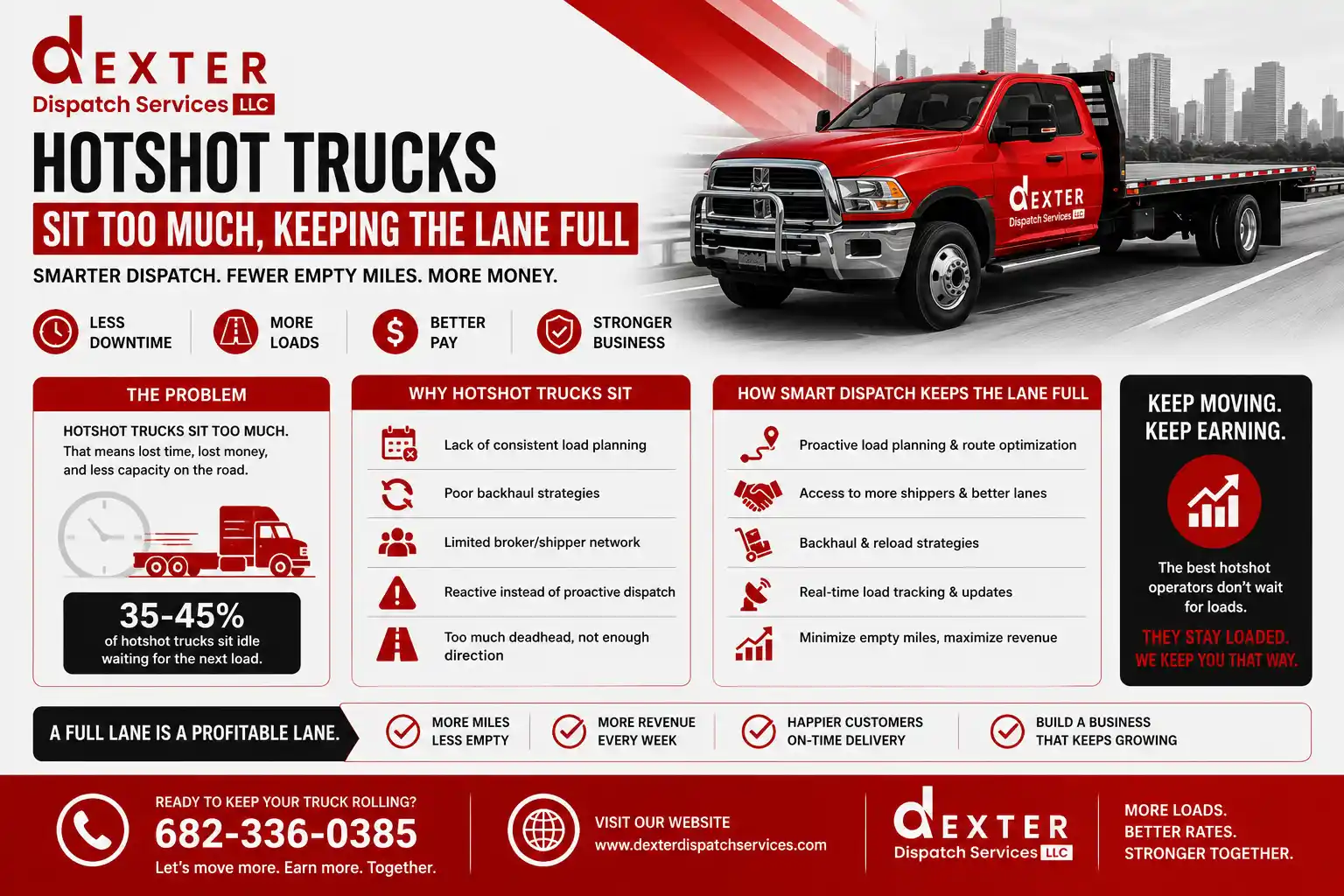
Why Hotshot Gaps Cut Deeper
Hotshot runs fast and has tight calls. This translates to more loads each week, and more loads equals more gaps to screw up.
The fat is thinner than a full-size flatbed, so there’s less fat to absorb a dead day. There is no wasted afternoon for a 200-mile drive, but there is for a 1,200-mile drive. The difference in cost between loads on a hotshot can exceed the amount paid for the load.
The Habit That Keeps the Lane Empty
The problem is that all loads are one-off. Deliver; look for the next one. Afterwards, ship and view once again.
That beat ensures that there will always be a lapse between runs, since the search will only begin after the truck has come to a stop. Line up the next load before this load drops you, matching the key to the place where this drop leaves off. After you stop, whatever is close to where you stopped is a yard you have to book.
Where Hotshot Operators Lose the Week
- Waiting for a hurry load that may not…as steady freight is coming.
- Ambition to get a good rate in a dead corner where there is no further corner.
- Arranging the next journey after delivery (all giving a gap at all hand-offs).
- Completing short trips that require no lane planning, thus compounding the “dead miles.
It is a little empty afternoon. If it’s the same pattern every week, then you’re paying to keep holes all week long.
What a Dispatcher Watches on a Hotshot
This entire task is maintaining a full lane and the truck’s position. This is not load-board scrolling, it’s planning work.
It means getting the bookings prior to the drop, hence movement of Trucks from drop to pickup without any dead days. It reflects a mindset of hanging around hotshot freight as opposed to corner chasing one-off rush loads. It is about deciding whether or not to play it safe or go for a really strong shot. That’s what it takes to distinguish a hotshot who’s on the move from one who works hard but sits for a long time. This is the same planning in hotshot dispatch services, in which the subsequent load is visible ahead of the current load.
The Number to Check This Week
Count the number of empty hours between the delivery/last pick up for your top 10 hotshot runs. Then, take that times the amount your truck charges per hour. If the gaps are more than your lowest-paid load, then the issue is not the rate. It was the way that was never used between runs.
Conclusion
Hotshot trucking can be very profitable, but this can only be the case if your truck is moving. Downtime also makes it difficult to carry on business, costly to operate, and diminishes revenue. The only way to maintain a full lane is to plan ahead, develop strong relationships with your brokers, have accurate load boards, and work with an experienced dispatch service. Organized and prepared hotshot drivers can help reduce miles being driven, improve freight options, and choose load types that are paid at a higher rate, which in turn will keep the truck on the road where it can earn more.
👉 Contact Dexter Dispatch Services at www.dexterdispatchservices.com or call us at [682-336-0385]