

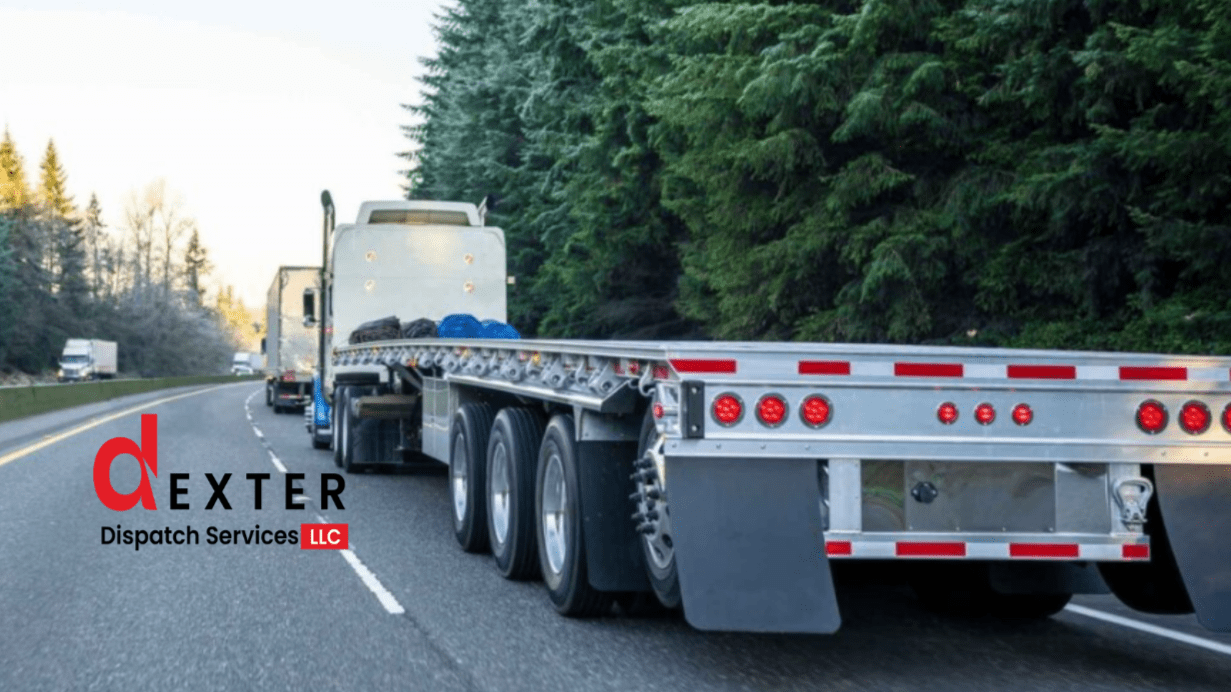
Flatbed trucking is actually quite significant in the aims of freight as it is the one type of trucking that transports heavy equipment, building resources, moving them over extended ranges. But unlike the trailers known for their body, flatbeds ensure that the cargo is out in the open, therefore, securing the elements is actually a major safety concern. No strap, chain or binder can be taken lightly as that one seemingly small lapse in concentration can result in lost loads, fines or even accidents.
At Dexter Dispatch Services, we get that safety is not so much a checklist, but the key to successful freight hauling. Whether you’re an owner-operator, operating a small fleet, or getting into flatbed trucking each day in your life will improve your load securement skills to keep you compliant, efficient, and driving safe down the road.
Why Flatbed Load Securement Matters
Flatbed load securement is not just a legal requirement – it is about life and money. Without proper load securing, the load can move or topple, posing a danger to the driver, other people behaving on the road, and cargo. The rules of the FMCSA are strict to make sure all stays locked in place while on the road.
- Here is the reason why securement is essential:
Safety: Nailing down the freight properly prevents accidents which can be caused due to a shifting load or spills.
Compliance: Playing by the rules of FMCSA helps to avoid costly tickets and to avoid having your truck out of service.
Reputation: You drive safely seeing confidence in brokers & shippers leading to better loads and a steady paycheck.
Efficiency: A properly secured load helps to reduce inspection time as well as reduce the retightening need while driving.
Key Principles of Flatbed Load Securement
To make sure your cargo is secure from the point of pick up to delivery, mentioned are these important principles:
Know Your Load : Understand the type of cargo, weight, shape and center of gravity before you have planned your tie-downs.
Use the Right Equipment: Select tie downs, chains, binders and tarps that are appropriate for your special freight.
Calculate Working Load Limit (WLL): The combined WLL of your cargo tie downs should be at least half the weight of cargoes.
Several Restrictions to Required to Restrain the Movement: Secure load in forward, backward, sideways, and vertical directions.
Regular Insights: Inspect all equipment before transport and throughout it, to ensure safe standards because of wear, rust or damage.
Comply with FMCSA $393.100-136: The sections cover federal cargo securement standards each flatbed driver must adhere to.
Tools of the Trade: Tie-Downs, Binders, and Tarps
Flatbed load securement needs trustworthy equipment. Here are the things every driver should have at his disposal:
1. Tie‑Downs and Straps
Made of polyester webbing or steel chains, they ensure that the freight is firmly secured without any possibility of movement.
Straps: Excellent for lighter weights of cargo or more delicate cargo
Chains: Suitable for heavy machinery, equipment or steel coils.
Edge Protectors: Keep strap damage caused by sharp edges of cargo.
2. Binders
Used for pulling chains in order to hold heavy loads.
Ratchet binders: Gain exact control and tension
Leverbinders: faster but need to be more careful when opening them
3. Tarps
Protect cargo from being washed by rain, debris or road grime.
Steel tarps: These tarps are used to transport heavy metal cargo.
Lumber tarps: Coat wood and construction materials.
Candela Hydraulics: Tarps dedicated for awkwardly-shaped cargo.
4. Dunnage and Blocks
Wooden or rubber dunnage helps to provide a stable surface and prevents the freight from rolling or moving in any direction.
5. Corner and Edge Guards
Assist in holding tension and ensuring cargo/straps integrity.
Best Practices for Securing Loads on a Flatbed
A professional driver’s reputation depends on securement skills. Follow these best practices:
Plan Before Loading: Determine the load’s layout and tie-down points before the forklift arrives.
Balance the Weight: Evenly distribute weight along the trailer to maintain vehicle control and stability.
Use Adequate Tie-Downs: Minimum of two tie-downs per load piece, and additional ones for longer cargo.
Angle Tie-Downs Properly: A lower angle increases tension and holding strength.
Check Load After 50 Miles: FMCSA requires a check within the first 50 miles and periodically afterward.
Tarp Securely: Avoid loose flapping tarps—they can tear or cause drag.
Recheck in Bad Weather: Rain, snow, or temperature changes can loosen straps.
Common Load Types and Their Securement Tips
Different freight types demand specific securement techniques.
1. Mechanical and Heavy Equipment.
- Use chains and binders that are able to take the full weight.
- Make sure you get all of the movable parts in place such as buckets, arms, and blades fixed.
- Always use at least 4 tie down if the machine is over 10,000 lb.
2. Furniture and Building Supplies.
- Good stacking of wood will prevent it from moving all around.
- Wrap the lumber in tarps and handle the lumber using edge protectors to keep your lumber tidy.
- Throw in anti-slip mats to increase the level of friction and prevent anything from sliding.
3. Steel Coils
- Never hold the coils in your hand, always use a coil bunk to store them so they do not become wobbly.
- Chain them “V” or cross style so that they will be held in place.
- So check your local lancet movement laws to make sure that you don’t get in trouble.
4. Pipe and Tubing
- Putting chocks or wedges to prevent the pipes rolling
- Put them on belly wraps – and put multiple tie-downs on them for extra safety.
- Do not put more than one layer on top of each other unless they have been properly blocked.
5. Concrete and Stone Products
- The placement of rubber padding between parts will prevent chunking.
- Bring down the load with heavy duty straps and tarps to prevent dust from getting in.
Avoiding Common Mistakes
Even experienced drivers can make costly errors. Avoid these frequent problems:
- Over-tightening tie-downs: Can damage cargo or straps.
- Ignoring worn equipment: Replace frayed or rusted gear immediately.
- Unbalanced loads: Lead to steering issues and tire wear.
- Skipping re-checks: Straps loosen naturally as you drive.
- Improper tarp handling: Loose tarps can rip or cause accidents.
Pro tip: Keep a load-securement checklist in your truck to ensure no steps are missed before hitting the highway.
Stay Ahead: Training and Compliance
Flatbed trucking safety depends on consistent learning. FMCSA, DOT, and state agencies frequently update regulations—so staying informed keeps you legal and safe.
1. Regular Securement Training
Attend certified securement workshops or online training programs. Many carriers offer in-house sessions to help drivers stay compliant.
2. Understand DOT Inspections
During roadside inspections, officers will check for:
- Proper number and placement of tie-downs
- Working Load Limit documentation
- Secure tarp and edge protection
- General trailer condition
3. Keep Records Updated
Maintain inspection reports and securement-equipment logs. This shows professionalism and compliance during audits.
4. Partner With Reliable Dispatch Services
A knowledgeable dispatcher—like Dexter Dispatch Services—helps drivers plan efficient routes, find profitable flatbed loads, and ensure enough time for safe securement.
Added Section: The Role of Technology in Load Securement
Modern trucking technology simplifies securement and compliance.
- Digital checklists and apps remind drivers to inspect tie-downs at intervals.
- Telematics systems track trailer stability and send alerts if cargo shifts.
- Electronic logging devices (ELDs) integrate securement check reminders with driver-duty status.
By combining experience with technology, drivers can reduce human error and keep freight safer than ever.
Added Section: Consequences of Improper Load Securement
Ignoring load-securement rules can have serious consequences:
- DOT fines up to thousands of dollars per violation.
- CSA score impact, leading to fewer load offers.
- Increased insurance premiums.
- Accidents or lost freight, damaging your reputation permanently.
Remember: a few extra minutes spent on securement can save your career.
Conclusion
Yo, flatbed load securement isn’t just going through the motions to pass a compliance check, it has everything to do with gross lack of professionalism, bragging, and keeping everything safe. Whether moving steel beams across states or delivering building materials closest to campus, I know each and every load will get there intact thanks to mastering securement techniques.
At Dexter Dispatch Services we’re not just a load booking company – we truly enable drivers just like me to work in a productive and safe manner. Their experienced dispatchers are ready to connect you with lucrative flatbed loads, drop route support on-the-fly and keep you up to date on FMCSA standards.
👉 Contact Dexter Dispatch Services at www.dexterdispatchservices.com or call us at [682-336-0385]