
The trucking industry commonly uses several types of trailers for freight transportation. However, two of the most widely used are dry van trailers and flatbed trailers. Both are used to transport goods over short and long distances, but each is designed for different types of cargo and loading methods.
Understanding the difference between dry van and flatbed trailers is important for shippers, dispatchers, and owner-operators, as it helps them choose the most suitable equipment for each type of load..
1. What Is a Dry Van Truck?
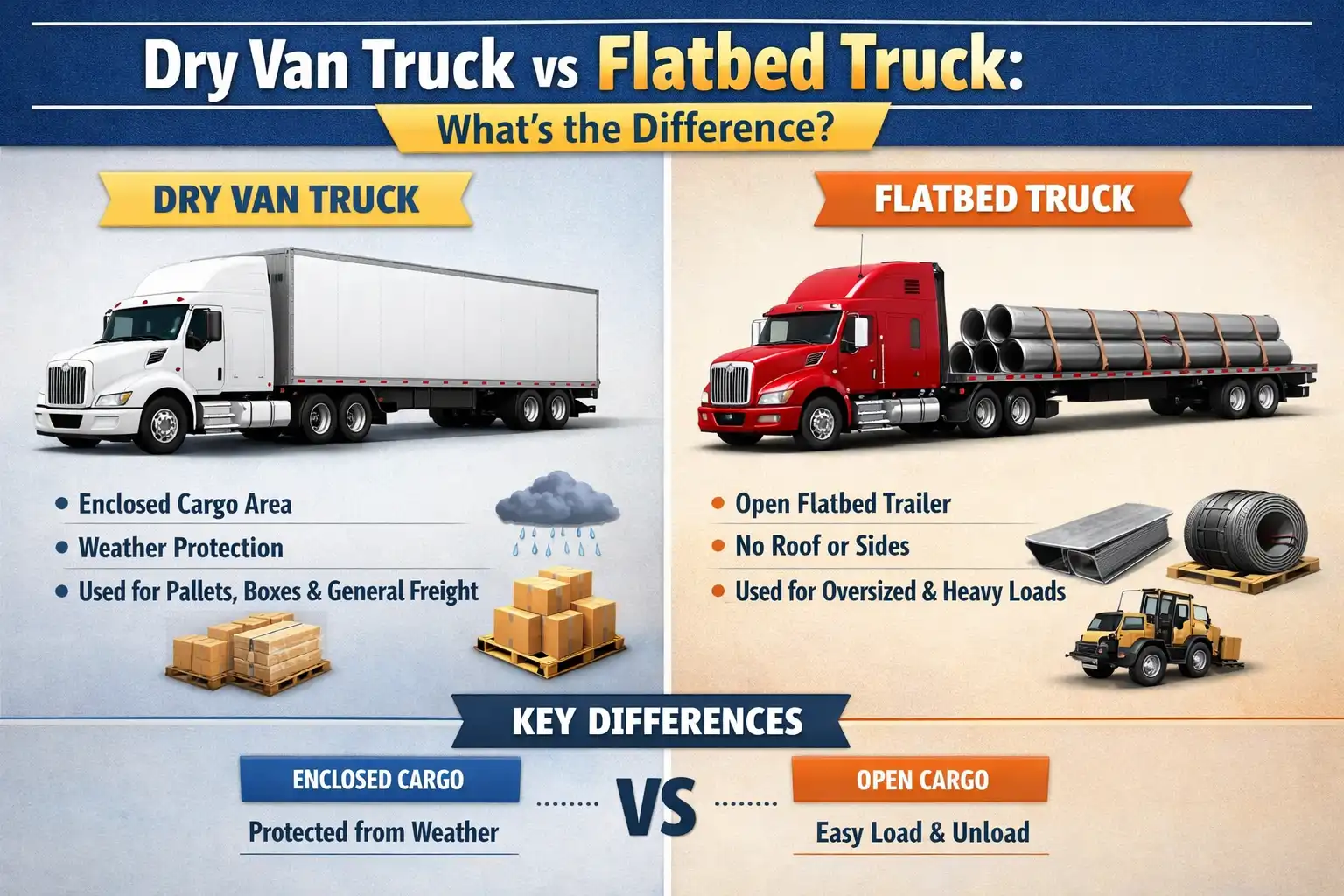
A dry van trailer is a fully enclosed freight trailer commonly used to transport general cargo. The trailer has solid walls, a roof, and rear doors, which protect the freight from weather conditions, theft, and road debris during transportation.
Dry van trailers are widely used in the trucking industry because they provide a secure and reliable way to move a variety of goods over both short and long distances.
Common Freight in Dry Vans:
- Palletized goods
- Electronics
- Clothing, retail products
- Non-perishable food items
- Household goods
Key Features:
- Weather protection
- Secure and enclosed cargo compartment
- Easy loading using forklifts at docks
- Most common trailer in trucking
Their sizes vary, but most dry vans are a length of 53 feet and are very widely used in retail, manufacturing, and distribution logistics.
2. What Is a Flatbed Truck?
A flatbed truck consists of an open trailer without walls or a roof, which allows cargo to be loaded from the sides, top, or rear. This design makes it ideal when it comes to moving loads that are large or irregularly shaped.
Common Freight on Flatbeds:
- Construction materials
- Steel coils and pipes
- Lumber
- Heavy machinery
- Oversized equipment
Key Features:
- Open trailer design
- Easy loading from a number of sides
- Ideal for oversized cargo
- Requires load securement (chains, straps, tarps).
- Flatbeds are used widely in construction, manufacturing, and industrial freight.
Main Differences Between Dry Van and Flatbed Trucks
| Feature | Dry Van Truck | Flatbed Truck |
|---|---|---|
| Trailer Design | Enclosed trailer | Open trailer |
| Weather Protection | Fully protected | Cargo exposed |
| Freight Type | General goods, retail products | Heavy or oversized loads |
| Loading Method | Rear dock loading | Side, top, or rear loading |
| Load Securement | Usually minimal | Requires straps, chains, tarps |
Which Trailer Is Better: Dry Van or Flatbed
The choice between dry van and flatbed trailers depends on the type of freight being transported. Dry van trailers are best suited for standard palletized freight that requires protection from weather and external conditions.
Flatbed trailers, on the other hand, are ideal for oversized, heavy, or irregular cargo that cannot fit inside enclosed trailers. Since dry vans transport everyday consumer goods, they are the most commonly used trailers in the trucking industry.
Flatbed trailers often carry specialized loads and may offer higher-paying freight opportunities due to the additional labor, equipment, and securement required
Conclusion
Both dry-van and flatbed trucks are an integral part of freight transportation. Dry vans offer secure enclosed shipping for general goods, while flatbeds allow the carriers to carry large, heavy, or oversized goods that would not fit in normal trailers.
For trucking companies and owner-operators, the use of the two depends on the type of freight, experience, and market demand.
👉 Contact Dexter Dispatch Services at www.dexterdispatchservices.com or call us at [682-336-0385]