
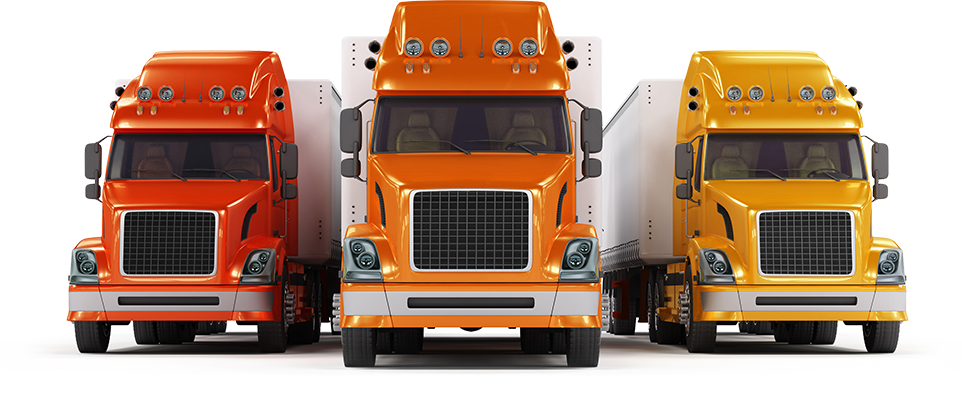
Flatbed trucking plays a vital role in the transportation industry, especially for moving oversized, heavy, and irregular freight that cannot be transported in standard trailers. It offers greater flexibility and often higher earning potential for drivers and owner-operators. However, flatbed trucking also comes with challenges such as physical labor, weather exposure, and stricter safety requirements. Understanding both the advantages and disadvantages helps drivers, owner-operators, and fleet managers decide whether flatbed trucking is the right option for their operations.
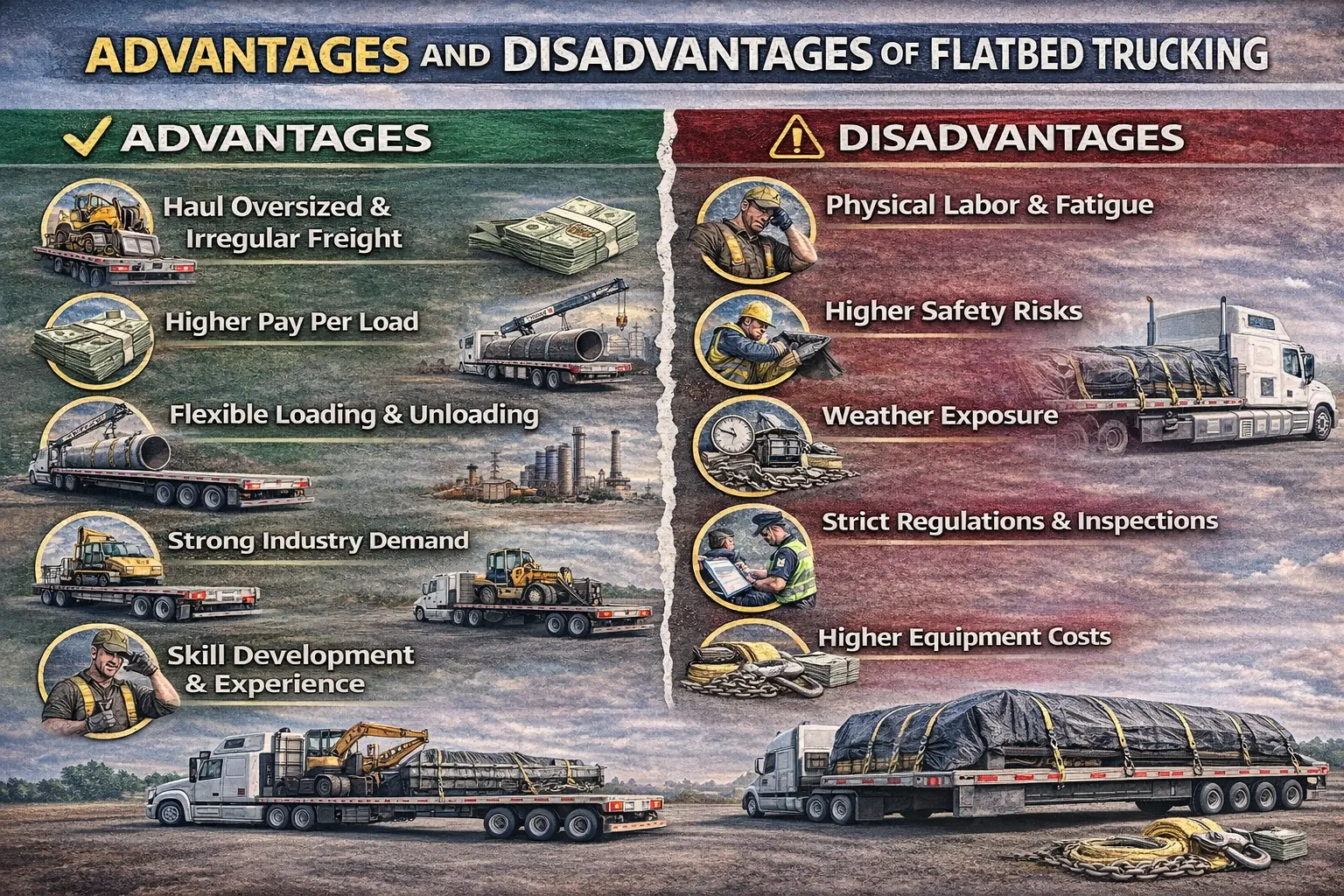
Advantages of Flatbed Trucking
Skills Development and Experience
Flatbed drivers learn beneficial skills such as load securement, ADP handling, oversize freight permitting and route planning. These skills can help open doors to specialized and higher-paying work.
Capacity to Haul Oversized and Irregular Freight
Flatbed trailers do not have walls or a roof, allowing them to transport cargo that cannot fit inside enclosed trailers , which means that this type of trailer can accommodate items that don’t fit in enclosed trailers. They are ideal for transporting long, wide, or oversized loads, tall freight, and heavy machinery.
Higher Pay Per Load
Flatbed trucking is often more remunerative than dry van trucking due to its specialized nature of freighting, physical labor, including tarping and securing, and greater responsibility and risk. Many of the flatbed drivers earn more per hour, per mile, or per load.
Flexible Order loading and unloading
Loading and unloading is possible from the top, sides, or back of flatbeds. This flexibility is especially useful at construction sites and industrial places that don’t have loading docks.
Strong Demand in Important Industries
Flatbed trucking is necessary in various industries, including construction and manufacturing, agriculture and energy & oil & gas. This creates steady demand for flatbed trucking services across many regions.
Less Dock Waiting Time
A lot of times, flatbed loads bypass waiting for the dock because they use a crane or a forklift and are brought right to job sites. This can increase the efficiency of trips.
Disadvantages of Flatbed Trucking
Physical Labor and Fatigue
Flatbed trucking is physically challenging. Drivers often do these tasks:
- Check off loads using straps or chains
- Cover and reveal freight using tarps
- Get on and off trailers
- Move heavy equipment
This work can cause:
- Fatigue
- Muscle strain
- Long‑term injuries
Compared to dry-van trucking, the driving operation of a flatbed truck involves a lot of manual labour.
Increased Safety Risks
Flatbed drivers present more safety dangers as they:
- Work at heights
- Slip while tarping
- Fall from trailers
- Deal with load shifts
Weather like rainfall, snow or ice increases these risks.
Weather Exposure
Flatbed freight is totally exposed to weather conditions, and that affects the cargo and the driver.
Common problems are:
- Rain-damaged loads
- Snow and ice raising danger
- Wind – Tarps and straps are being affected
- Extreme heat or cold
Unlike enclosed trailers, flatbeds will offer no protection from the elements.
Time-consuming loading and unloading
Flatbed loads normally take longer because:
Points of load must be carefully positioned
- Securing takes time
- Tarping can add hours
- Additional executions (inspections) required
This can reduce the number of loads that get completed per week.
Strict Load Securement Regulations
Flat-bed trucking has detailed securement rules. Drivers must:
Use the proper number of tie-downs
- Abide by weight – limit rules (WLL)
- Re‑check loads often
Mistakes can lead to:
- DOT violations
- Fines
- Out‑of‑service orders
- Higher Equipment Costs
Flatbed drivers need to purchase and maintain things such as:
- Straps
- Chains and binders
- Tarps
- Edge protectors
Updating damage worn gears can end up being costly in the long run.
Seasonal Fluctuations of Freights
Flatbed freight is frequently seasonal (particularly in the construction and farming industries).
This can cause:
- Slower periods in winter
- Irregular availability of load
- Income changes
Dry-van freight is generally more stable throughout the year.
Cargo Damage Risk
Because freight is exposed:
- Loads can get wet
- Tarps can tear
- Straps can loosen
Cargo damage can result in:
- Claim disputes
- Rejected loads
- Payment delays
Permit and Oversized loads problems
Many flatbed loads need:
- Special permits
- Route planning
- Escort vehicles
This creates complexity, delays and stress to drivers and dispatchers.
Not Beginner‑Friendly
Some of the requirements of Flatbed trucking include:
- Experience with securement
- Knowledge of regulations
- Far confidence in the handling of heavy freight
Many companies favor having experience as a driver, so flatbeds aren’t the best for beginners.
Conclusion
Flatbed trucking offers higher earning potential, flexibility, and specialized work, but it also demands physical effort, strong safety awareness, and regulatory knowledge. Drivers who enjoy hands-on work and variety may find flatbed trucking rewarding, while others may prefer the simplicity of enclosed trailers.
Understanding the advantages and disadvantages of flatbed trucking helps professionals make informed career and business decisions.
👉 Contact Dexter Dispatch Services at www.dexterdispatchservices.com or call us at [682-336-0385]