
The importance of winter tyres for commercial trucks.
Winter driving is more than just a traction problem; it’s a liability problem.
When it snows and ices up for owner-ops and carriers:
- Accident risk
- Insurance exposure
- Downtime probability
- Delivery delays
When selecting winter tyres for trucks, it is not about comfort. It is about having an element of control in low-traction scenarios while safeguarding your revenue and safety profile!
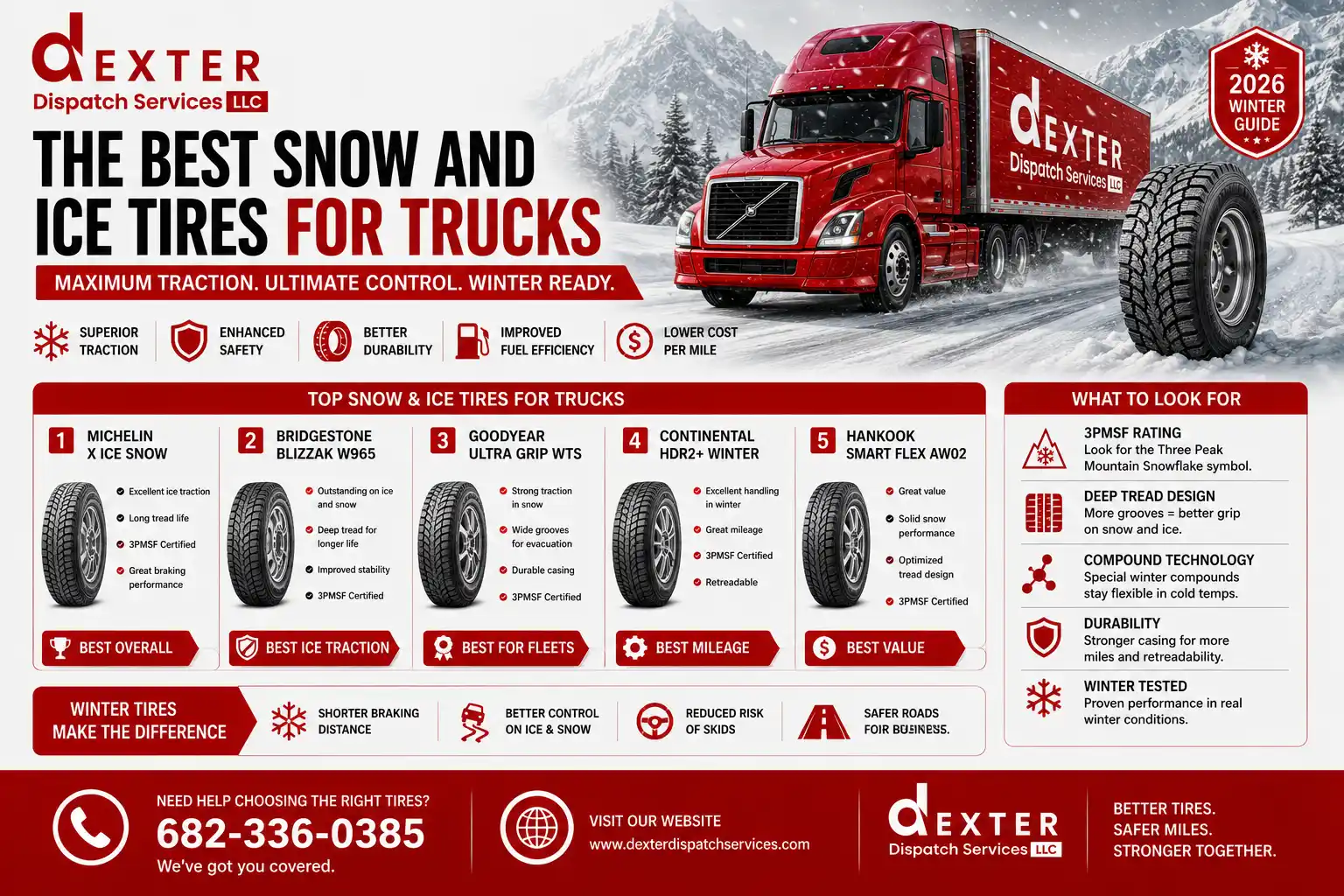
Why Winter Tires Matter for Commercial Trucks
But before we get to the main topics, let’s explain why you even need a special tyre for your truck during snow and icy conditions. After all, all tyres are equal, right? Not quite.
Driving in the cold, wet snow is quite different from driving on the traditional blacktop, and that will make the wheels behave differently. Winter tyres are constructed to resist conditions and deliver enhanced traction, grip, and braking performance compared to other tyres, which will help you stay safe while you drive in winter conditions. The way they do it is in these ways:
- Composition. The main difference between winter and regular tires is what they’re made of. Traditional tires become hard and brittle in freezing weather, while truck tires for snow and ice have a special rubber compound that stays soft and maneuverable in freezing weather. The more flexible makeup equals grip, traction, and increased safety.
- Tread. Dedicated winter tyres boast a more aggressive and deeper tread pattern than conventional tyres. These special tread designs provide better grip when the tyre cuts into snow – it can even enhance braking.
- Siping and grooving. The best snow and ice truck tyres have small slices and grooves along the wheel and footprint of the tread pattern that provide greater resistance and traction on icy and slippery roads and could help reduce stopping and braking distances.
Top Winter Tire Options for Different Use Cases
Nokian Hakkapeliitta Truck D
Nokian is a Finland-based tyre company, known for winter and all-weather tyres, and when it comes to winter tyres, they surely know their stuff. Nokian, credited with making the first (and best) winter wheels, has produced the Hakkapeliitta Truck D tire, with a patented tread block design and lateral siping to help it grip the road in winter driving conditions like ice.
| Pros | Cons |
| Great tread resistance for regular wear | Higher prices |
| Low rolling resistance | Hard to find in the USA |
| Quiet operation | |
| Suitable for both snow and ice |
Michelin Agilis CrossClimate C-Metric
Michelin offers good all-season light truck tyres for snow and ice for truckers who won’t be encountering extreme weather. The Agilis CrossClimate C-Metric is an outstanding illustration of such. An excellent choice for commercial use, this is a great choice for urban and rural trips and is rated for winter driving. It has a shorter stopping distance and greater grip than other brands.
| Pros | Cons |
| Siping technology for improved traction | One of the more expensive brands |
| Sidewall protectors for urban driving | Acceptable on light snow but not a complete replacement for a dedicated snow tire |
| Acceptable for dry, wet, and snowy roads | Shorter treadwear life |
| Impressive braking distance on wet and dry roads | |
| Comfortable and quiet ride | |
| One of the best-known companies; readily available |
Bridgestone Blizzak LT
The Bridgestone Blizzak LT tire comes in as a close runner-up to Michelin. One of the best winter options for heavy-duty truck vehicles that are used on a regular basis in snowy conditions, this tire has everything that you want in a winter tire.
| Pros | Cons |
| Special compound for water wicking | Another expensive brand |
| Ideal for ice and snow | Acceptable on light snow but not a complete replacement for a snow/ice-grade wheel |
| Great traction in various depths of snow | Poor tread life |
| Short stopping distances | |
| Good traction, handling, and braking on ice |
Goodyear WinterCommand (Light Truck)
A name synonymous with safety, durability, and variety of choices, Goodyear is one of the most popular tires in the market. The Goodyear WinterCommand tire as well.
| Pros | Cons |
| Multiple tread patterns for all terrains | Not ideal for heavy winter conditions |
| Made from an ultra-flexible compound | Limited sizes |
| Zig-zag sipes for better handling and cornering | No mileage warranty |
| Optional studs for greater traction | |
| More affordable prices |
All-Season vs Dedicated Winter (Operational Decision)
It’s tempting to buy an all-season truck tire to drive in the snow and icy conditions, but be careful before buying. While they might suffice on snow and slush or when it’s cold a few times a year, these wheels are far less capable than real winter wheels.
Options of all-seasons are best if the winter conditions are not extreme. In severe weather, carriers may be liable if they are using the wrong equipment, and safety planning during operations is a critical task. Dedicated winter wheels are always worth the investment if you’re going to be driving in some really cold and harsh snowy conditions. The general rule of thumb is that the tires on trucks that operate in the snow/ice should feature a small image of a mountain and snowflakes. If you are forced to use your all-season truck tires in the snow and ice, caution should be exercised during harsh snowfall.
Winter Driving Risk Management Tips
Knowing how to select high-quality wheels is a crucial step towards ensuring safe driving, and knowing how to use them in tandem with good choices is even more important. With the best snow and ice truck tyres, here are some tips to do MORE with tyres!
- When driving on roads in cold, snowy, or wet conditions, extra caution is necessary.
- Leave a distance cushion between cars as much as possible. Stopping distances pre-trip brake inspection (winter) go up markedly, particularly when the trailer is loaded.
- Be aware of the behavior of others on the road.
- Avoid overcorrecting when you are slipping.
- Monitor the tires for pressure and wear regularly.
- Change winter tyres when the weather becomes warm enough for them and store them risk-free.
It’s not about performance alone – it’s a requirement that Federal law requires during inspection.
How Winter Tires Protect Revenue
Vehicle damage is not the end of a winter-related occurrence most of the time. It can lead to:
- Missed appointments
- Unpaid detention
- Load rescheduling
- Insurance claims
- CSA impact
- Increased maintenance costs
Winter accidents are a costly expense for owner operators, as one accident can wipe out weeks of profit. With the right tyres, this exposure is minimized.
Winter Preparation Is Operational Strategy
The weather in winter is what you can expect. Accidents are not.
The distinction lies with the planning.
These bylaws form a structured plan with the right tires and proper checks, reducing risk — and keeping cash flowing even in bad weather.
Here at Dexter Dispatch Services, we have drivers working with a greater concept in mind: load planning, compliance, equipment readiness, and smart routing.