
The terms truck dispatching and freight brokering are used interchangeably. They have ties to the trucking industry but operate totally differently.
This is a common source of confusion, particularly for beginners who are supposed to make a career in their field. At the drop of a hat, many people find themselves researching dispatching and hear about freight brokers, broker authority, surety bonding, and even FMCSA regulations. It is in that context that things get complicated.
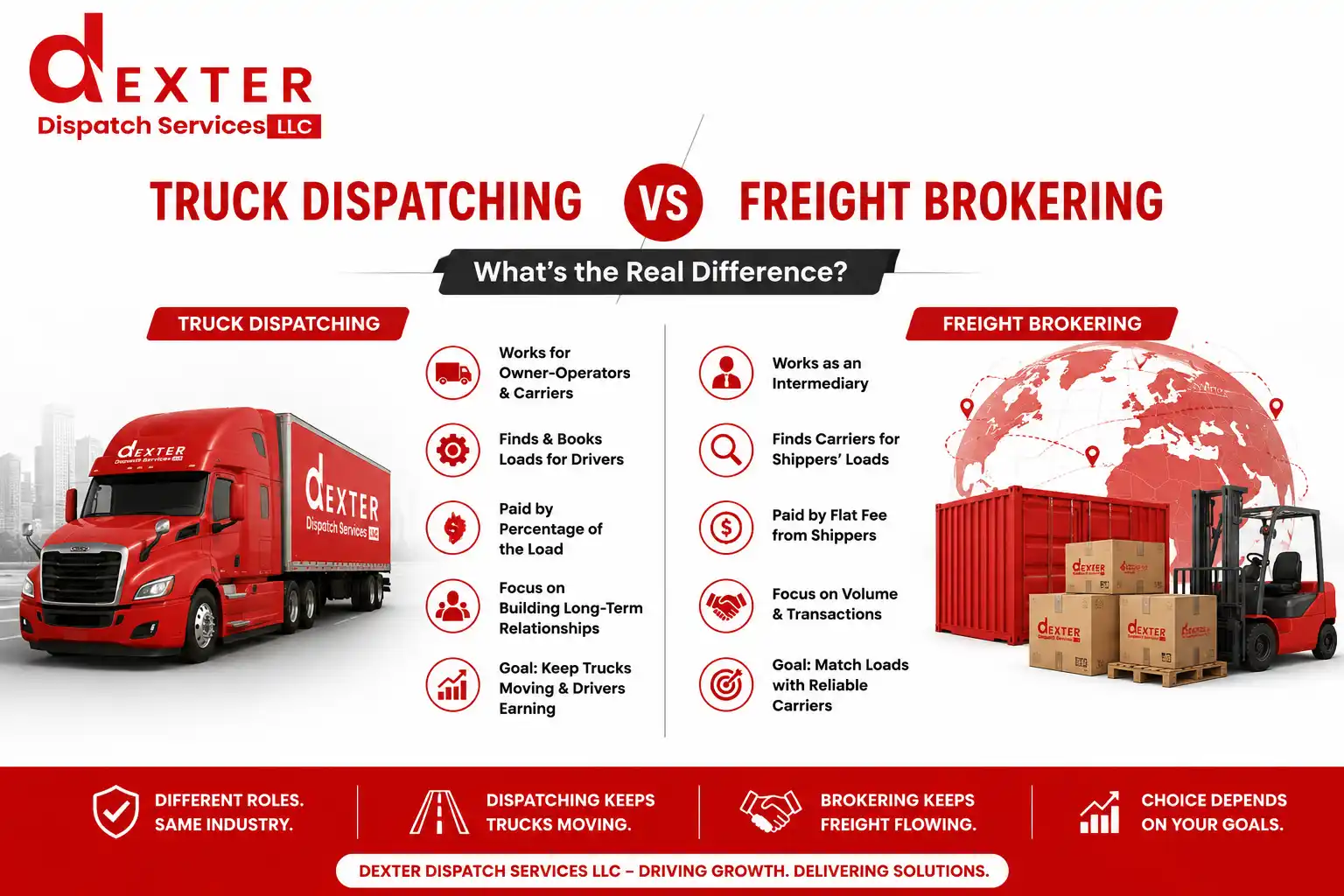
The truth in a nutshell. A dispatcher is someone who employs carriers. A freight broker is a mid-personnel between shippers and carriers.
While they both provide transportation for goods, they also have vastly different job duties, legal obligations, salary and wages potential, and daily schedules.
Whether you are considering which one is right for you, this guide takes the hassle out of choosing.
What Is Truck Dispatching?
Truck dispatching services serve trucking firms or truck owners who need assistance finding loads and handling their dispatch needs.
The dispatcher is quick to work with the carriers. They are responsible for keeping trucks on the road and minimizing downtime.
Most dispatchers:
- Search for loads
- Talk to brokers for discounts.
- Plan routes
- Handle paperwork
- Communicate with drivers
- Solve delivery issues
- Manage schedules
In simple words, dispatchers help truck drivers stay loaded and profitable.
The dispatcher is typically paid a percentage of the load by the carrier or paid a weekly rate.
A dispatcher, for example, makes a $2.5K load booking and charges 5%; he makes $125 from the load.
What Is Freight Brokering?
Freight brokers work differently.
A freight broker acts as the middleman between shippers and carriers.
Their job is to:
- Find companies that need freight moved
- Connect them with trucking companies
- Negotiate shipping prices
- Coordinate transportation
- Ensure deliveries happen smoothly
Brokers do not own trucks in most cases. Instead, they build relationships with both shippers and carriers.
For example:
- A manufacturer needs freight moved from Texas to Florida
- The broker finds a carrier willing to move the load
- The broker keeps the difference between shipper payment and carrier payment as profit
That difference is called the broker margin.
The Biggest Difference Between Dispatchers and Brokers
The main difference comes down to who you represent.
Dispatchers represent carriers
A dispatcher works for the trucking company or owner-operator. Their responsibility is to protect the carrier’s interests and find the best possible loads.
Freight brokers represent freight
A broker works to move freight for shippers. Their goal is to cover loads efficiently while maintaining profit margins.
This difference changes how both businesses operate every day.
Licensing and Legal Requirements
This is where freight brokering becomes more serious legally.
Truck Dispatching Requirements
In most cases, dispatchers:
- Do not need broker authority
- Do not need a surety bond
- Can start with lower costs
However, dispatchers must operate correctly.
A dispatcher should only represent carriers they are directly working with. Once dispatchers begin acting like brokers without authority, legal problems can happen.
For example, dispatchers should not:
- Take full control of freight transactions independently
- Represent themselves as brokers
- Handle freight without carrier authorization
Freight Broker Requirements
Freight brokers need:
- Broker authority from FMCSA
- A $75,000 surety bond
- Legal business registration
- Compliance with transportation regulations
Starting a freight brokerage costs significantly more than starting a dispatch business.
That is one reason many beginners start with dispatching first.
Startup Costs Comparison
Startup cost is another major difference.
Starting a Dispatch Business
A dispatch business usually requires:
- Laptop
- Internet
- Phone system
- Load board subscription
- Business setup
- Basic marketing
Many dispatchers start with a relatively small budget.
Starting a Freight Brokerage
Freight brokering requires:
- FMCSA authority
- Surety bond
- Insurance
- Transportation management systems
- Office setup
- Credit management
- Compliance costs
The financial barrier is much higher.
That does not mean brokering is better. It simply means the business operates on a larger level.
Income Potential
Both industries can become profitable, but the earning structure is different.
Dispatcher Income
Dispatchers usually earn:
- Per-load percentage
- Weekly flat fee
- Monthly management fee
Income depends heavily on:
- Number of trucks managed
- Freight market conditions
- Carrier relationships
- Negotiation skills
Most dispatchers scale by adding more trucks under management.
Broker Income
Freight brokers make money from load margins.
For example:
- Shipper pays $3,500
- Carrier accepts $2,900
- Broker keeps $600 margin
Brokers can potentially earn higher profits per load, but the competition and risk are also higher.
Margins also change constantly depending on the market.
Daily Work Looks Different
At first glance, both jobs seem similar because both involve freight movement and phone calls.
But daily responsibilities feel very different in practice.
A Dispatcher’s Day
A dispatcher often spends time:
- Updating drivers
- Searching load boards
- Negotiating with brokers
- Solving scheduling problems
- Tracking deliveries
- Managing truck availability
The focus stays close to the carrier.
A Broker’s Day
A broker usually focuses on:
- Finding shipper contracts
- Covering freight
- Building carrier networks
- Managing customer relationships
- Handling claims
- Tracking freight performance
The focus stays closer to customers and freight sales.
Which One Is Easier for Beginners?
Dispatching is generally easier to enter.
Reasons include:
- Lower startup costs
- Fewer legal barriers
- Simpler setup process
- Faster learning curve
That is why many people start with dispatching to understand how the trucking industry works before moving into freight brokering later.
However, dispatching still requires skill.
Many beginners underestimate how difficult it can be to:
- Negotiate rates
- Build broker trust
- Understand freight lanes
- Manage drivers professionally
Success still takes time and consistency.
Risks in Both Businesses
Both industries have challenges.
Dispatching Risks
- Difficult drivers
- Low freight rates
- Carrier dependency
- Market slowdowns
- Broker payment issues
Freight Brokering Risks
- Claims and disputes
- Non-payment from shippers
- Carrier fraud
- High competition
- Legal compliance problems
Freight brokering usually carries more financial and legal risk overall.
Which Business Makes More Sense in 2026?
The answer depends on your goals.
Dispatching may fit you better if:
- You want lower startup costs
- You prefer working directly with carriers
- You are starting alone
- You want remote work flexibility
- You are new to trucking
Freight brokering may fit you better if:
- You want larger-scale operations
- You enjoy sales and client acquisition
- You can handle higher business costs
- You want direct shipper relationships
- You understand logistics deeply
Neither path is automatically easier or better.
Both industries reward people who:
- Communicate professionally
- Build relationships
- Understand freight markets
- Stay organized
- Solve problems quickly
Can a Dispatcher Become a Freight Broker Later?
Yes, many people transition from dispatching into freight brokering.
Dispatching teaches important industry skills like:
- Freight negotiation
- Lane analysis
- Broker communication
- Carrier operations
- Load management
That experience becomes valuable later when starting a brokerage.
In fact, many successful brokers started by working closely with carriers first.
Final Thoughts
Truck dispatching and freight brokering are connected but very different businesses.
Dispatchers work to support carriers and keep trucks loaded. Brokers work between shippers and carriers to move freight profitably.
One business focuses more on truck management. The other focuses more on freight sales and logistics coordination.
If you are just entering the trucking industry, dispatching often provides a simpler starting point with lower financial risk. Freight brokering offers bigger scaling opportunities but comes with more responsibility and regulation.