

For many drivers, the loading dock is the place where the risk goes up. Tight backing conditions. Unclear communication. Forklift traffic—unsecured trailers.
Loading dock safety isn’t solely about meeting OSHA standards; it also impacts detention time and liability risks, CSA scores, and delivery reliability.
One Dock incident can cost an owner-operator an entire week’s profits!
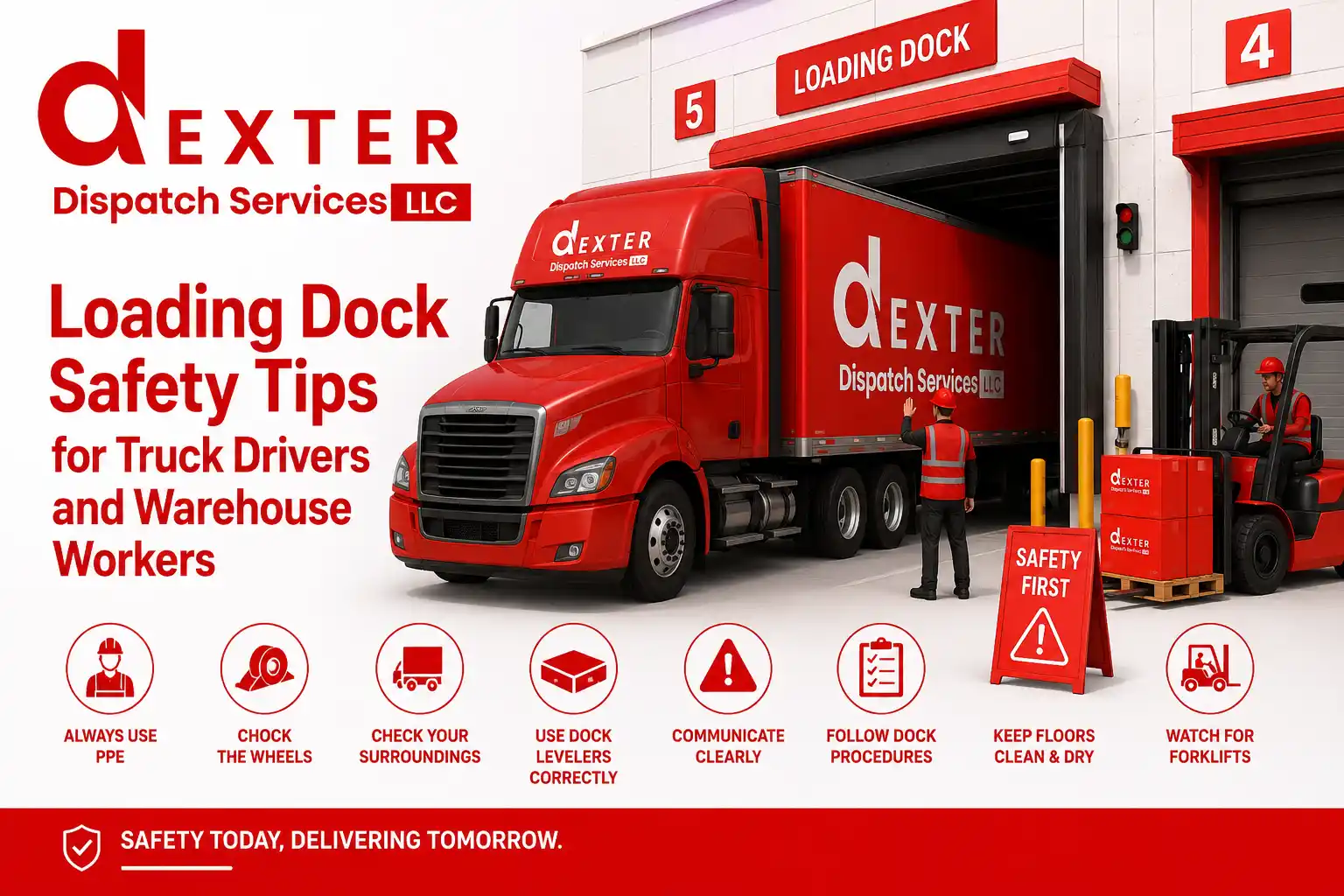
Control Dock Traffic and Movement
- Restrict pedestrian access
- Provide separate forklift and driver’s areas.
- Visible signal in front of the trailer movement
- Ensure that the dock lock is engaged before offloading.
When docks are congested, the risk of accidents increases, and ships are detained longer.
Train Personnel and Educate Visitors
Reducing the potential for human error accidents by creating knowledge and adherence to the rules of your loading dock for everyone using it, including employees and visitors.
- When using loading docks, ensure workers are made aware of the risks and hazards by taking a course on loading dock protocols and guidelines.
- Ensure staff are aware to look after one another, stay alert to visitors, and report any safety rule violations.
- When feasible, remind or inform visitors to take necessary safety precautions through oral reminders/notice/pamphlets to visitors so they will also take precautions.
Respond Quickly
- Clean spills immediately.
- Repair damages — such as to equipment and the premises — as soon as practicable.
- If you see that any product is loose, secure it promptly.
Dock Incidents and Their Financial Impact
Dock accidents cause injury — and they create:
- Insurance claims
- CSA score impact
- Equipment damage
- Missed appointments
- Unpaid detention
- Brokers’ rate reduction
However, for owner operators, the damage to the dock can lead to times and costs of:
- Trailer repairs
- Claim disputes
- Temporary downtime
- Loss of broker trust is a type of violation.
Not only do safe dock practices prevent injury to persons, but they also help to preserve income.
Communicate Clearly
Communication not only helps things run more smoothly, but it can also help prevent accidents and arguments.
- Have universally recognized visual aids (such as red/green lights, “traffic lights” – vehicles should know when to approach or stand where they are).
- There should be timely communication with other parties about any delays, unexpected issues, or changes to the plan, to ensure people are not waiting unnecessarily in the loading dock and that interactions remain calm and productive.
- Ensure people engaged in moving activities (such as forklift drivers, people moving loads, etc.) call out to others who are moving in their path (or about to move in their path).
Lack of clarity in communication at the Docks creates unnecessary delays and prevents meeting appointment times.
Get Regular Maintenance
Preventative measures will save you cash on potential repairs and avoid undue downtime. They can also minimize potential dangers.
- Maintain floor cleanliness and repair cracks and breaks promptly to ensure there are no trip or fall hazards.
- Schedule regular equipment maintenance, especially your dock plates, to detect potential problems early. A failure of dock equipment can delay unloading and increase driver wait time.
Other Loading and Unloading Dock Safety Tips
Besides the general loading and unloading dock safety tips, there are also a few other general tips:
- Stay alert. Be aware of your surroundings and activity around you as well as what you are doing.
- Mitigate where there are sharp edges. Sharp edges and protruding corners of products, such as on-site equipment, can be padded to minimize the risk of on-site injuries to personnel.
- Implement OSHA and other safety precautions. Ensure that people and visitors understand the consequences of not adhering to the safety rules and procedures in place. This includes carrying all the necessary documentation for heavy machine operators at all times. Make sure everyone wears the necessary safety equipment.
- Install physical barriers, where possible. Use a loading dock board or a ramp from the ground to the loading dock area. Install scissor gates, railings, or other barriers to prevent unauthorized entry.
- Ensure knowledge of correct lifting techniques. A large number of physical injuries are the result of employees not lifting heavy objects properly.
- Locking devices keep trailers from accidentally splitting from the dock – and request it from contractors and deliverers.
Safety Protects Revenue
Safety on loading docks is not a problem only in warehouses.
It directly impacts the truck drivers and carriers:
- On-time performance
- Detention exposure
- Insurance premiums
- Broker relationships
- Long-term profitability
- Structured operations reduce unnecessary risks.
What we want from our drivers is a sense of safety, planning, and communication, which are not ‘extras’ when using Dexter Dispatch services.
tact Dexter Dispatch Services at www.dexterdispatchservices.com or call us at [682-336-0385]