

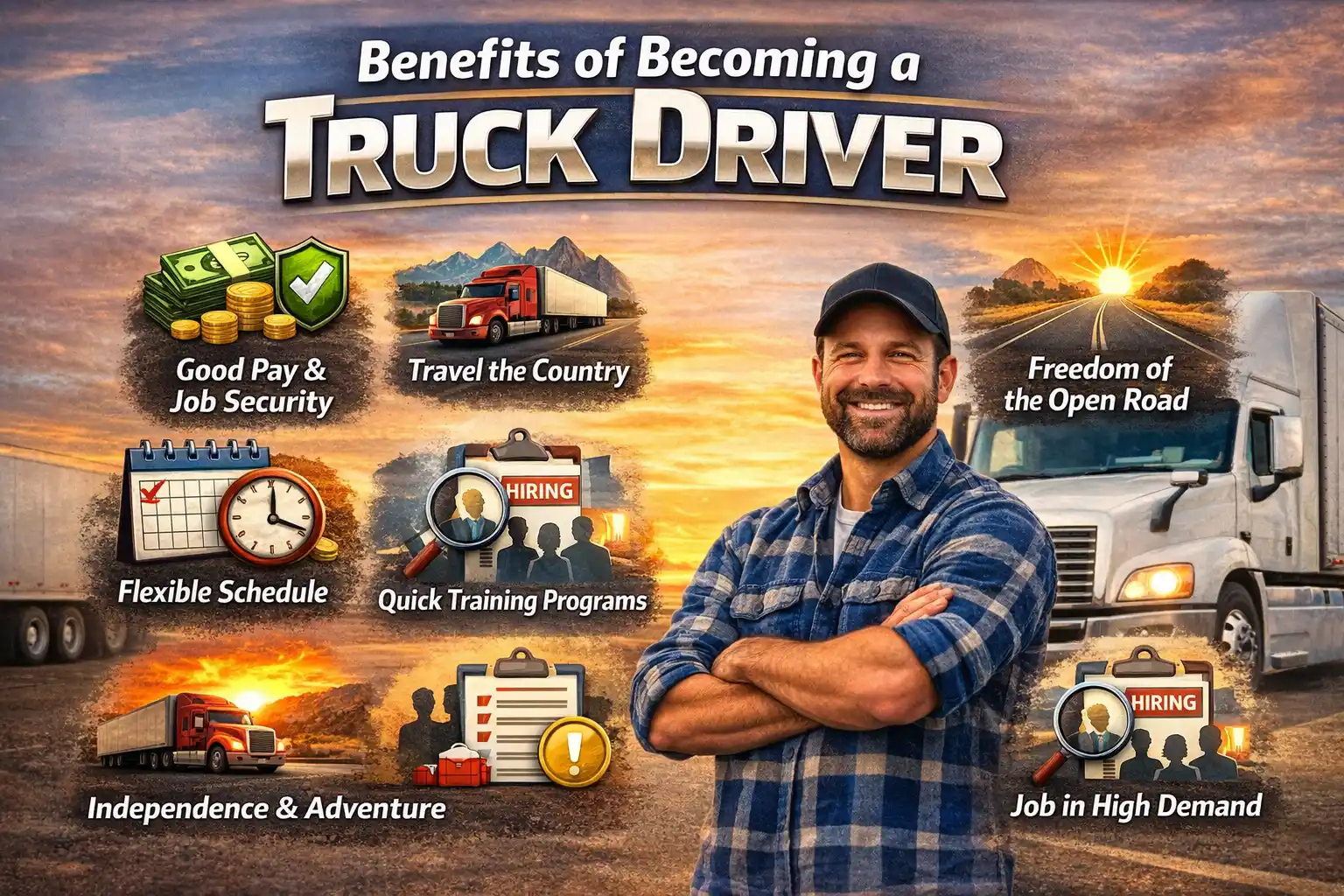
Truck driving does come with some real advantages—income potential, independence, and flexibility—but those advantages look completely unique depending on how this work was structured. For drivers who are operating independently or are looking to become owner-operators, trucking is less a job and more a continuing challenge of operations.
Understanding the advantages of becoming a truck driver, therefore, requires separating expectations from reality, particularly when it comes to income and scheduling and time between loads.
Competitive Salary
The average national salary of a truck driver is $67,457 annually. Earnings can fluctuate depending on a number of factors, including the size of the company, the location of the job, and the experience of the driver. The high demand for truck drivers brings a sure and stable income. Moreover, bonuses might be in the air for taking on certain routes that other drivers might shy away from, and incentive programs are given for a laudable safety record or for covering significant miles.
While average salary figures do offer a useful comparison, the trucking income is hardly a stable concept from one week to another. Missed reloads, unpaid waiting time, and inefficient routing can rapidly destroy the anticipated earnings. As many experienced drivers have learned, there is more to earning potential than just the rate itself: much depends on the way in which the work is planned.
Exploration
Truck drivers have the privilege to be able to explore different locations while being paid for it. While job duties necessitate driving to various parts of the country, truck drivers can utilize their free time to visit landmarks and attractions. For those who crave visiting more of the USA, trucking provides an entry point to travel.
Independence
The nature of transporting goods frequently places truckers in solitude, engendering the feeling of self-supervision. Although employers provide directions for making deliveries, the drivers frequently have freedom about the routes they use, the trucks they drive, and their work schedules.
Career Advancement
Those who love what they do and wish to advance in the trucking profession can pursue more training for higher pay. Opportunities for career advancement include becoming a certified instructor at a truck driving school, transitioning to a management role, or pursuing entrepreneurship as an owner-operator by starting their own trucking company.
From Driver to Owner-Operator: Changing the Benefits
Many drivers pursue owner-operator status for greater control and income potential. At that point, perceived advantages of trucking change. More independence also leads to more responsibility for planning, negotiation, complying, and time management.
The difference between a sustainable operation and constant stress often comes down to the degree of structure put into weeks and the sequencing of freight.
Employee Benefits
Entry-level truck drivers frequently have access to all types of employee benefits, from medical, dental, vision, and life insurance coverage to retirement plans and referral bonuses. Paid time off, including holidays and vacation time, are very common options as well, and specifics may differ by position and company.
Flexible Schedules
To be a truck driver means that you have the luxury of creating your own fucking schedule, promoting a healthy work/ life balance. Whether it is choosing to work weekdays only to spend weekends with the family or to work on the day shift or at night, the flexibility goes beyond the traditional 9 to 5 routine.
Education Cost Assistance
In order to become a truck driver, the route to take is the driving school, where they obtain the Commercial Driver’s License (CDL), which takes roughly 8 weeks on average. Some trucking companies pay for the CDL exam, and reimbursement for some or all of the driving school tuition is not uncommon. This financial support helps alleviate the burden of education costs for potential truck drivers.
Control Over the Distance of Driving
Truck drivers, in many cases, enjoy liberty in choosing the distances they cover. Whether taking shorter routes to return home every day or uphill routes lasting several days, it is up to the truck driver’s wishes and desired working hours. For a not-your-average trucker, this flexibility of choosing driving distances adds to the appeal of the profession.
Positive Impact
Truck driving is a profession that makes an impact on the others. By delivering key commodities to different places like grocery stores, gas stations, malls, and hospitals, truck drivers play a significant role in the availability of things that people need. A career as a truck driver is meaningful for those seeking to make a positive contribution through their work.
Time on the Road
A typical truck driver schedule is spending a significant amount of time alone on the road; grant concedes truck drivers plenty of free time. This solitude can be used for personal growth, whether it’s learning new skills using audiobooks or educational materials such as documentaries. For someone who loves to better themselves and learn, opportunities are presented to them in unique ways; the time spent on the road as a truck driver is something that is not like any other.
Community Connection
Despite the individualistic nature of the job, truck driving often involves a community among trucking pros. Many truck drivers bond closely with other truck drivers who have the same lifestyle, forming a supportive network within the industry. For those who want a sense of camaraderie and community in their profession, trucking has a community beyond the usual work environment.
Tips for the inexperienced truck driver
Those considering a career on the road as a truck driver will find that the advantages extend beyond just the road. Here are some tips to go through this profession successfully:
1. Follow Road Rules
Aspirants to become truck drivers should be able to focus on safety by knowing and following all rules on the road. This ensures a safe and smooth journey through the highways.
2. Maintain Your Vehicle
Truck drivers should perform in-depth vehicle inspections before each route to make sure everything is in excellent working order, making everyone safer. Regular maintenance is important for a reliable and efficient trucking experience.
3. Punctuality Matters
Just as in any other business, timely deliveries are of the utmost importance when driving a truck. Prospective truck drivers should plan out routes accordingly and leave early if possible so that they can make delivery deadlines.
4. Complete Proper Training
In addition to the formal education, aspiring truck drivers should embrace the training provided by their company to familiarize themselves quickly with company guidelines and best practices. Fulfilling the requirements to become a truck driver equips you with essential skills and protocols.
Conclusion
Truck driving has meaningful benefits—independence, income opportunity, and career growth—but they are realized in different ways based on the way the work is managed.
For those persons driving autonomously and independently, it is not really the driving; it is more coordinating loads, timing, and gap putting up between paid loads. Many find that the long-term rewards of trucking are not as job-specific as they are about how the week will be planned.
As drivers shift from an employment pattern to an ownership pattern, the need for operational support and structured planning can be a potentially significant tool to delivering on the promise of trucking, especially in optimizing routes, managing schedules, and ensuring compliance with regulations.
👉 Contact Dexter Dispatch Services at www.dexterdispatchservices.com or call us at [682-336-0385]