
In the world of trucking, the process of locating consistent and lucrative freight is one of the greatest challenges for truck drivers. This is particularly for those driving step-deck trailers, which are designed to carry taller and oversized freight that will not fit on a normal trailer. Dispatchers contribute much to the matters in helping truck drivers secure these loads and keeping their trucks moving.
A professional dispatcher knows the freight market, builds relationships with other brokers and shippers, and utilizes cutting-edge tools that help locate the available loads. By doing this, dispatchers help drivers to maximize their earnings and minimize downtime between trips.
In this guide, we will discuss how dispatchers locate step-deck loads and how dispatchers enable truck drivers to be profitable in a competitive market.
What Is a Step Deck Load in Trucking?
Step Deck – Also called a drop deck trailer, it is a trailer that has two deck levels. The upper deck is closer to the cab of the truck, whereas the lower deck lies on the ground. This design permits the taller freight, which normally would be above height limits with a regular flatbed, onto the trailer.
Due to its unique structure, the use of step-deck trailers is common in hauling:
- Construction equipment
- Industrial machinery
- Large generators
- Agricultural equipment
- Boxed steel pipes and building materials
These types of cargo often require special handling and ways to secure them. Dispatchers must be able to understand what step-deck freight requires to make sure that the loads are compatible with the capabilities of the truck and driver.
Why Step Deck Trucks Are in High Demand
Step-deck trailers have immense usefulness in industries that carry oversized cargo. Many kinds of machinery are too high to be transported on dry vans or on flatbeds, so step-deck trailers are the preference.
Sometimes the demand for step-deck trucking may arise from fields such as
- Construction
- Manufacturing
- Oil and gas
- Agriculture
- Infrastructure development
Because of the operations of these industries, step-deck freight is often available in many regions all year round. However, knowing the optimal loads requires knowledge of freight markets and having good connections in the industry—something that experienced dispatchers are special in.
Top Ways Dispatchers Find Step Deck Loads
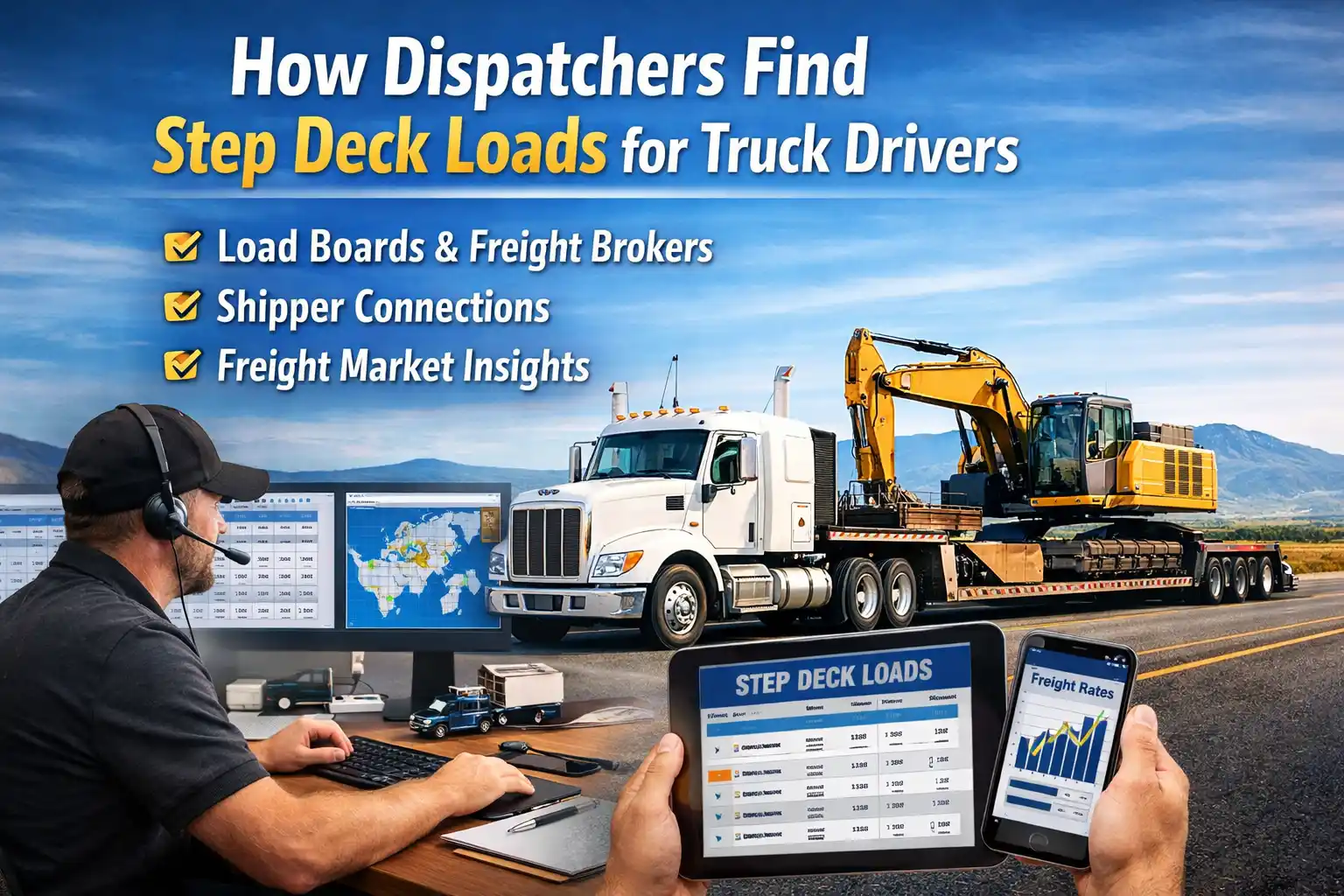
Professional dispatchers have several ways of finding loads for the truck drivers. These methods assist them in obtaining steady, repetitive freight and negotiating the best fee.
Using Load Boards
Load boards are one of the most common tools that dispatchers use. These online platforms match truck drivers with freight brokers who require a means of transportation for their loads.
Dispatchers monitor load boards all day to find step deck freight matches driver equipment, location, and availability. By being quick, dispatchers can reserve loads before they are claimed by other carriers.
Load boards also let dispatchers compare rates, distances, and schedules to pick up loads in order to select the most productive loads.
Working Directly with Freight Brokers
A freight broker represents the shipper and carrier. Experienced dispatchers develop long-term relationships with brokers that heavily move step-deck freight.
Once trust is established, however, brokers make direct contact with dispatchers once they have loads available. This allows drivers to have access to freight opportunities before they are even advertised to the public on load boards.
These relationships can greatly increase the chances for a driver to obtain consistent loads.
Building Relationships with Shippers
Some dispatchers also work directly with the shippers. A shipper is the company that requires products or equipment to be taken from one place to another.
By building relationships with shippers, dispatchers can get dedicated/low-price freights. This translates to the drivers being able to get regular loads from the same company, which saves them time on the road searching for new freight.
A direct shipper relationship has a particular value for step-deck trucking because some industries, such as construction and manufacturing, need constant transportation.
Monitoring Freight Market Trends
Freight demand may vary with the season, area, and industry activity. Experienced dispatchers monitor these trends to figure out where step-deck freight is most experienced.
For example:
- Construction projects make demands go up during warmer months.
- Peak in agricultural equipment transport during farming seasons
- Heavy haul opportunities created by infrastructure projects
By knowing these patterns, dispatchers can schedule drivers to be in areas where they can get the highest-paying loads available.
Best Load Boards for Step Deck Trucks
While there are a number of load boards available, some load boards are particularly useful for step deck freight. Dispatchers will frequently work off platforms that have heavy listings of freight and dependable links with brokers.
Popular load boards have often come with:
- Real-time freight listings
- Rate comparisons
- Broker credit information
- Route planning tools
The ability to use these platforms effectively enables dispatchers to quickly find loads that suit the specifications of a particular truck and driver preferences.
How Dispatchers Negotiate Better Rates
The easiest part of the job is finding a load. Dispatchers also negotiate with brokers to get the best rate they can offer the driver.
Strong negotiation skills are helpful in ensuring that drivers are paid fairly for:
- Long distances
- Oversized cargo
- Special Management Handling Requirements
- Tight delivery schedules
Dispatchers use market data and knowledge of the industry to justify premium rates. When brokers know that the dispatcher represents a good carrier, they are sometimes willing to agree to better pricing.
Tips for Truck Drivers to Get More Step Deck Loads
While dispatchers do a lot of the work, there are things that can also be done by drivers to increase their likelihood of securing quality freight.
Some helpful tips include:
- Maintaining a step-deck well-equipped trailer
- Having safety apparatus and security devices on standby
- Delivering loads within time and having a good reputation
- Communicating on a regular basis with the dispatcher
A reliable driver makes it easier to develop trust between dispatchers and brokers or shippers.
Common Challenges Dispatchers Face
Finding step-deck loads is not necessarily easy. Dispatchers are faced with a number of challenges, including:
- Highly competitive freight industries
- Fluctuating fuel costs
- Seasonal freight shortages
- Strict cargo regulations
Despite these challenges, seasoned dispatchers know how to adapt and keep on finding profitable opportunities for their drivers, such as identifying niche markets or optimizing routes to maximize load efficiency.
Benefits of Using a Step Deck Dispatch Service
Many owner-operators and small trucking companies decide to work with professional dispatch services because they make the whole freight management process easy.
A dispatch service is able to assist drivers by:
- Finding consistent loads
- Negotiating higher freight charges
- Communicating with Brokers and Managing Paperwork
- Planning efficient routes
- Minimizing empty miles between loads
This frees up truck drivers to do what they do best—drive and deliver freight in a safe way.
Conclusion
Step-deck trucking plays an important role in the transportation of oversized and specialized freight around the country. However, finding the right loads requires time and industry knowledge as well as good industry relationships with brokers and shippers.
Dispatchers are the link between the truck drivers and freight opportunities. The sections here are, by using load boards, building broker relationships, and analyzing market trends, they help the drivers to keep their trucks loaded and profitable.
For owner-operators and trucking companies, it can mean a big difference between a consistent income and downtime in service to work with an experienced dispatcher.
👉 Contact Dexter Dispatch Services at www.dexterdispatchservices.com or call us at [682-336-0385]