
Oversize loads are an important part of the flatbed trucking business. Many industries rely on flatbed trailers to transport large and heavy equipment that cannot fit the standard legal size limits for trucks. Because of their open design, without walls and a roof, flatbed trailers are ideal for hauling oversized cargo.
This article covers what oversize loads are, why flatbed trucks are commonly used and how these loads can be transported safely.
What Are Oversize Loads?
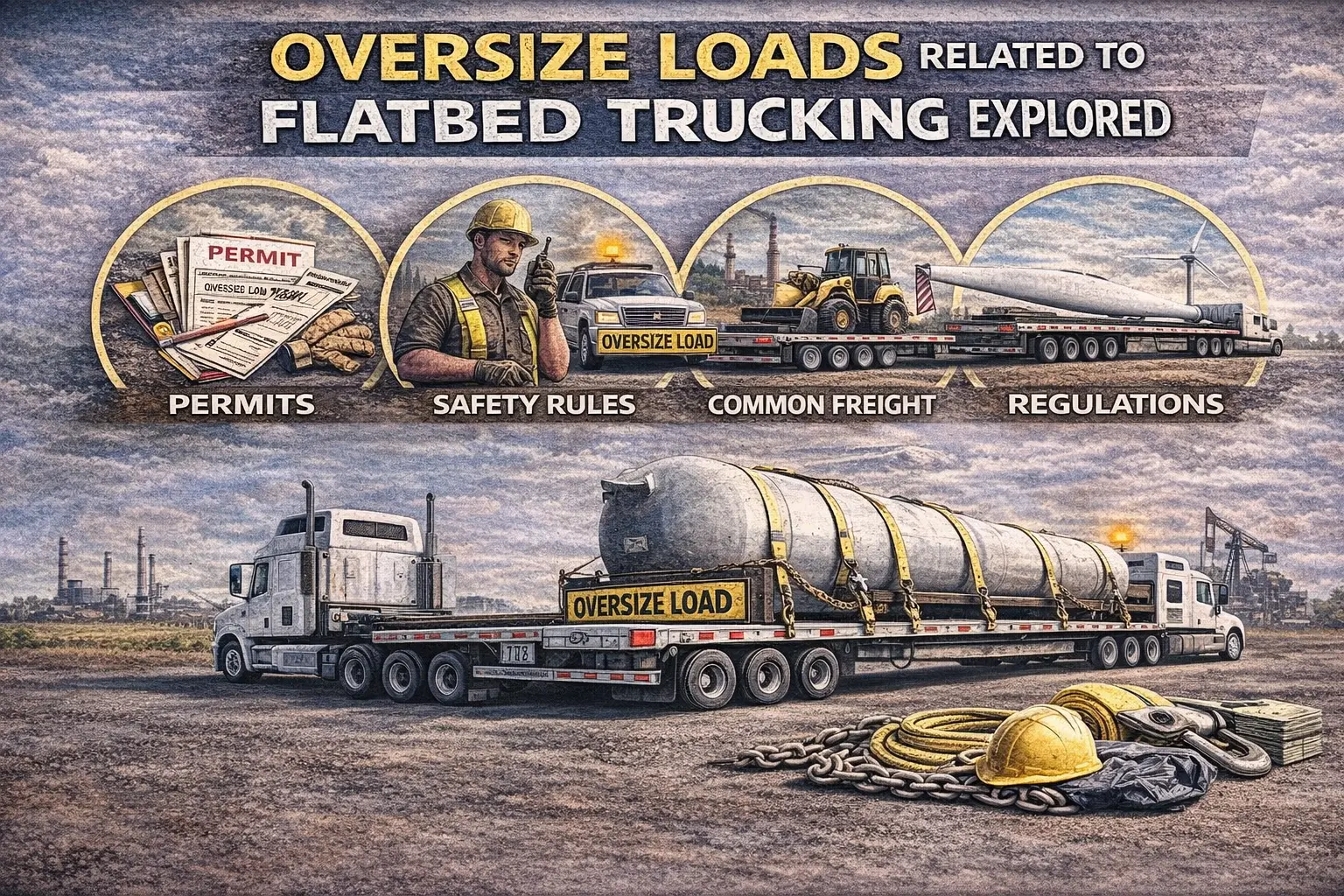
Oversize loads, also known as over-dimensional (OD) loads, are those shipments that are larger in size or weight than is financially possible on public roads. These limits are imposed by transportation authorities to ensure the safety of the roads and to protect the infrastructure, such as bridges and highways.
A load is generally considered bothersome if it surpasses one or more of the following common designations within the United States:
- Width: 8.5 feet (102 inches)
- Height: 13.5 and 14 feet (depending on the state)
- Length: 48–53 feet for trailers
- Weight: Gross Vehicle Weight-80,000 pounds
When cargo becomes greater than these limits, it will be classified as an oversized load and require special handling.
Why Flatbed Trucks Are Used for Oversize Loads
Flatbed trucks are usually used for oversize freight due to their open design, which permits cargo to sit off the normal limits of enclosed trailers.
Some of the most important reasons why flatbeds are used are:
- No Walls or Roof to Restrict Cargo Size
- Easy Loading from the Top or Sides
- Ability to Transport Tall or Wide Freight
- Flexibility to Carry Unusually Shaped Cargo
Due to all of these advancements, flatbeds are the top choice when it comes to transporting large equipment and industrial components.
Common Types of Oversize Loads
Many industries ship freight that is larger than normal using flatbed trailers. Some of the more common types are the following:
Heavy Construction Equipment
Large construction machines are often oversized, and they require flatbed transportation.
Examples include:
- Bulldozers
- Excavators
- Cranes
- Road graders
Industrial Machinery
Factories and manufacturing plants use large machinery that cannot fit into the average trailer.
Examples include:
- Generators
- Turbines
- Industrial presses
- Manufacturing equipment
Building Materials
Some of the construction materials may be very long or wide.
Examples include:
- Steel beams
- Precast concrete panels
- Large pipes
- Structural components
Energy and Infrastructure I Equipment
The energy industry tends to transport pieces of equipment that are too heavy.
Examples include:
- Wind turbine blades
- Power transformers
- Oilfield equipment
- Storage tanks
Types of Flatbed Trailers Used for Oversize Loads
Different types of flatbed trailers are used depending on the size of the cargo and how massive it is.
Standard Flatbed Trailer
Flatbed trailers are often used for moderately oversized freight that still fits within acceptable height limits.
Step Deck Trailer
Also known as a drop deck trailer, taller cargo can be carried with the help of lowering the deck height.
Double Drop Trailer
Designed for extremely high freight with a lowered center deck
Extendable Flatbed
Extendable trailers allow carriers to transport extremely long freight, including wind turbine blades and steel pipes.
Permits Required for Oversize Loads
Oversize loads cannot move freely on highways without special authorization. Drivers must get permits from the states through which they travel.
Oversize permits include the specifications of:
- Approved travel routes
- Travel time restrictions
- Required safety equipment
- Requirements of escort vehicles
Each state has its own rules, so the planning of routes is important.
Safety Requirements for Oversize Loads
Transporting Oversized Freights Such transport requires taking additional safety precautions to avoid injuring both the driver and other motorists.
Common requirements for safety are as follows:
- Oversize Load banners
- Warning flags on the corners of the load
- Amber warning lights on the truck
- Escort vehicles for incredibly large shipments
These safety measures aid in alerting other drivers to the presence of a large vehicle on the road.
Challenges of Hauling Oversize Loads
While the oversize loads are a form of profitable, they can also create unique problems.
Route Planning
Drivers must not use the roads with:
- Low bridges
- Narrow lanes
- Weight restrictions
Limited Travel Times
Many states limit oversize loads from traveling:
- At night
- During rush hour
- In conditions of severe weather
Complex Regulations
Permits and rules differ from state to state, so compliance is complicated.
Why Are Oversized Loads Important
Oversize freight is especially critical in large industries like construction, manufacturing and energy. Without the flatbed trucking, it would be extremely difficult to transport the large equipment needed for the creation of infrastructure and industrial facility operations.
Flatbed trucking is the way to ensure large, heavy and specialized cargo arrives at its destination safely and efficiently.
Conclusion
Oversize loads are a specialty area of flatbed trucking, which must be planned, permitted and carefully carried for safety reasons. Because these shipments exceed the normal size limitations, they require experienced drivers, special trailers and strict compliance with transportation rules.
Understanding how oversize loads work is important to drivers, dispatchers and logistics folks to handle large shipments in a way to keep shipments moving while making highways safe.
👉 Contact Dexter Dispatch Services at www.dexterdispatchservices.com or call us at [682-336-0385]