

When you deal with truck freight shipping, it’s impossible to avoid a multitude of terms, one of which is “accessorials.” So, what are accessorials to transportation professionals? Essentially they include additional charges on top of the base rate, often in regard to industry-specific services or situations. Understanding these fees is essential for comprehending the practice of invoicing and possibly reducing costs. Let us dive into the concept of accessibility, its importance, and how to combat it.
Accessorials are in logistics, extra charges to services in the logistics process, which are necessary for the completion of the delivery or the provision of services such as detentions, liftgates, or unpacking services. Such charges, which are not calculated in normal base rates, are itemized on freight bills.
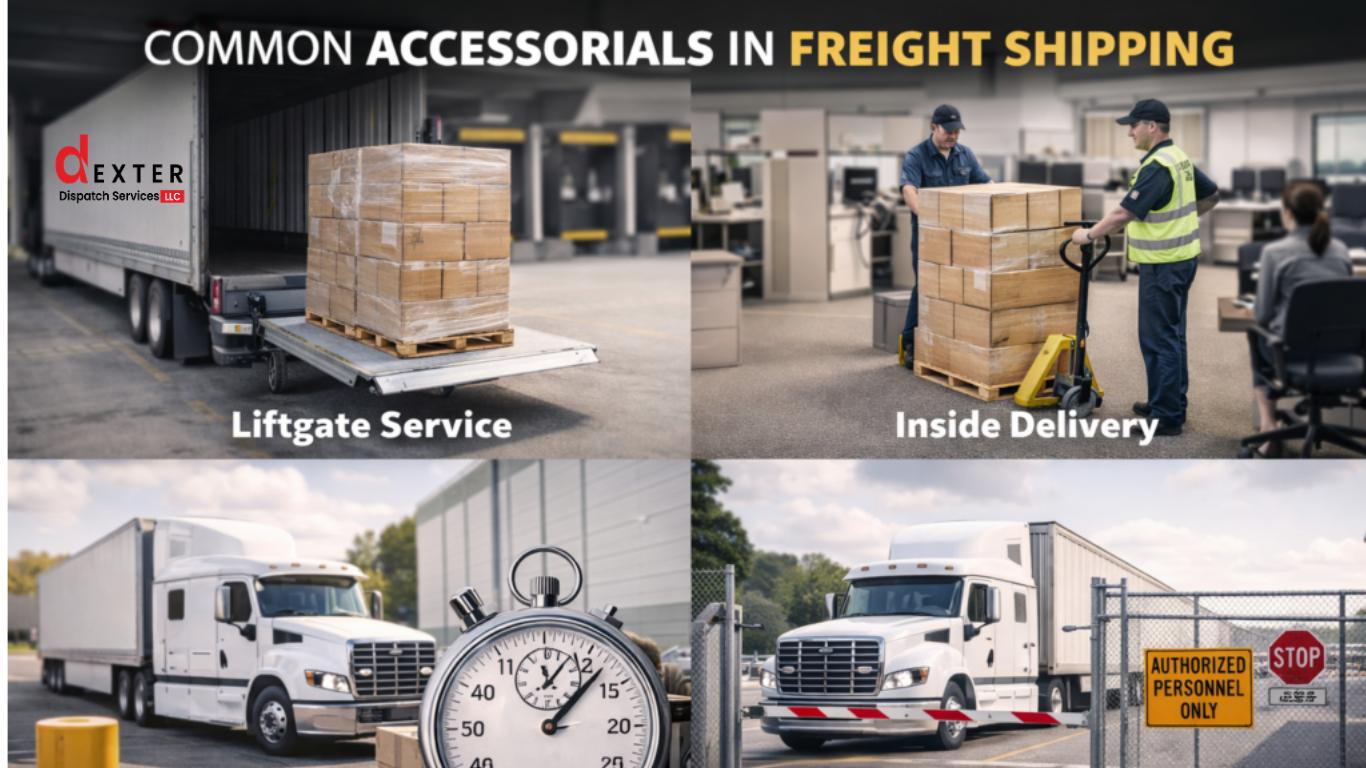
Some examples of accessorial charges are
- Extra time and distance shipments may require extra time or stops while traveling, resulting in extra charges due to delays.
- Special Equipment or Handling: Deliveries that require special equipment or handling, such as lift gates or special loading/unloading procedures, incur additional charges.
- Special Escorts or Permits: Loads that are higher in weight or size requirements will often require special permits or escorts that come at an additional cost.
Unfortunately, not all the necessary resources or services are foreseeable before loading shipments. In such a case, carriers charge for relevant accessorial charges after delivery—in the freight audit process.
To avoid surprises and counter these accusations, the shippers and receivers should proactively think about the specifics of the shipment and plan accordingly. By doing so, they can reduce the chances for unexpected accessorial fees and optimize the logistic and financial efficiency as a result.
The 10 Most Common Freight Accessorial Charges
Freight carriers will often charge a host of accessorials, but here are 11 that are most common and worth looking out for:
#1. Detention
Similar to layovers, detention occurs where drivers are distinctly compelled to wait more than enough time during loading or unloading.
#2. Hazmat
This fee applies to transporting hazardous materials, with special Department of Transportation requirements, and often results in higher costs for carriers both in complying with regulations and in credentialing issues.
#3. Reconsignment
Occurs when the destination for delivery is changed after the load is picked up, and it requires changing routes, potentially affecting delivery schedules.
#4. Excess Cargo Insurance
In addition, standard cargo coverage is usually $100,000, but for high-value commodities, supplemental coverage will be needed, and rates will vary according to the type of commodity and distance traveled.
#5. Stop-Off Charges
Arise when carriers have to make special stops to pick up or deliver goods according to the terms and meaning of the contract.
#6. Tanker Endorsements
Imposed if large amounts of liquids are taken in dry van trailers, where drivers must possess a CDL tanker endorsement, which is prescribed by the FMCSA.
#7. Lumper Fees
Commonly seen in the food industry, lumper fees are charges for third-party unloading services that are separate from normal transport costs; these fees are paid to various service providers at different levels.
#8. Special Equipment
The term “Special Equipment” refers to various types of equipment such as edge protectors for open decks and extra straps for van trailers, which are often available but not in large quantities.
#9. Layover Fees
Flat charges are applied when shippers are not prepared for scheduled arrivals of drivers so that drivers can return later instead of waiting on-site.
#10. Driver Assist Fees
Also known as tailgating fees, to be applied when drivers have to assist in the loading and unloading of the cargo, including assistance to load, if there is a request.
How to Prepare for Accessorial Charges
Matters related to preparing for accessorial charges as a freight broker involve several proactive steps. Here’s what you can do:
Supply Detail of BOL Information:
Make sure your Bill of Lading (BOL) contains all the necessary instructions for handling the cargo and does not contradict the requirements of the law for your specific carrier.
Maintain Values on the Scale and Measurements:
Check your load for those weight limits against the laws and ensure it is distributed correctly in the trailer in order to avoid expensive reworking costs.
Consider Additional Requirements:
Anticipate additional equipment and handling needs such as forklifts, pallet jacks, or liftgates and alert your carrier ahead of time to avoid potential and unexpected charges.
Get Acquainted with NMFC Numbers:
Any Less-Than-Truckload (LTL) shipments, knowing your National Motor Freight Classification (NMFC) number is useful for obtaining the correct number for classifying your good.
Conduct BOL Line Item Audits:
Communicate shipping expectations at each point to ensure accuracy at completion of the BOL in order to minimize potential errors and discrepancies.
Make Preparations for Unforeseen Events:
While by doing a thorough planning can reduce surprises but stay flexible for any unforeseen situations that may come up during the freight shipping process. Adaptability on all sides is important to ensure things continue to be smooth.
Conclusion
In conclusion, truckload accessorial charges can be both expected and unexpected. While they may feature on your invoice, it may not always be easy to understand what each charge means. Educating yourself about these charges increases your preparedness to anticipate and possibly avoid these charges in the future. So collaborating with a reliable dispatching partner such as Dexter Dispatch Services is definitely an advantageous first step. For exact cost projections and reliable dispatching services, be free to contact us and get the best loads for your needs and complete paperwork management.
👉 Contact Dexter Dispatch Services at www.dexterdispatchservices.com or call us at [682-336-0385]